Having not ridden my bike in over 4-months I was embarking on a journey of the unknown, both physically and spiritually, through the Grand Circuit of Siem Reap's temples. It is a mesmerising adventure into Cambodia’s history and architectural splendour and will remain a highlight of my time in South-East Asia.
This 42km (26-mile) circuit highlights some of the most stunning and well-preserved historical temples in the world, offering a glimpse into the history of the Khmer Empire. All of these temples are included in the 1 ($37), 3 ($62), or 7-day ($72) Angkor Pass, which you can buy from the Angkor Enterprise website, simply show it on arrival at each of the sites in the area to be checked-in and help expand travel further afield.
Here’s a detailed look at some of the many temples within the Grand Circuit, along with recommendations for other sights further afield. Hopefully you will have as magical time as I did.
My Route
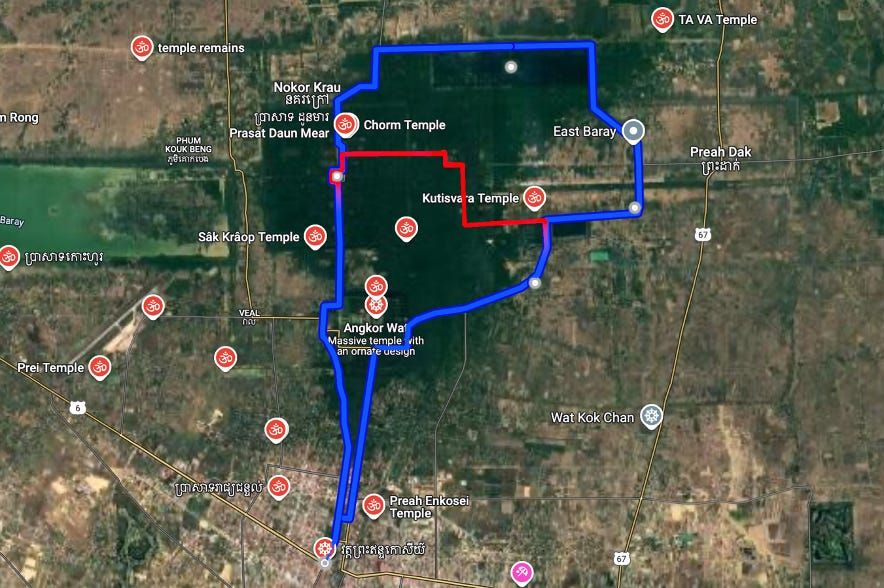
Leaving the centre of Siem Reap and heading North towards Angkor Wat, after 15km the temples begin thick and fast; Prasat Kravan, Banteay Kdei, Ta Prohm, and Pre Rup are all in close proximity to one another, running East to West.
After Pre Rup, a decision is to be made; double the distance or stick to the Grand Circuit, I went for the former despite the 32º heat of Cambodia’s dry season. The road North to Banteay Srei is straight and quiet, heading through farmland and homesteads it is a pleasure to see the real Cambodia and understand the agriculture that is so intertwined with recent history. Along this road there is the Cambodia Landmine Museum and Banteay Srei Butterfly Centre, which are good options to break up the journey. This is also the main route to the Kulen National Park, mountain, and waterfall.
After Banteay Srei and heading South to rejoin the Grand Circuit, there are several beautiful temples to see; East Baray and Ta Som, before getting to Neak Pean, Preah Khan, and the many sights of Angkor Thom; Bayon, Terrace of Elephants, and a dozen others.
This was a full day cycling, covering about 85km in total, the alternative is a Tuk-Tuk trip which shows at about 2.5-hours of moving time, plus however long you would like to spend at each of the sights.
Petite and Grand Circuit
The Grand Circuit (blue) from Siem Reap centre runs around the perimeter of the Group, whereas the Petite Circuit shortcuts (red) through the middle, however it does take in some of the more famous temples, such as Ta Prohm. My route opted to take in the Ta Prohm, before doubling-back towards the East.
The Sights
📍 Angkor Wat
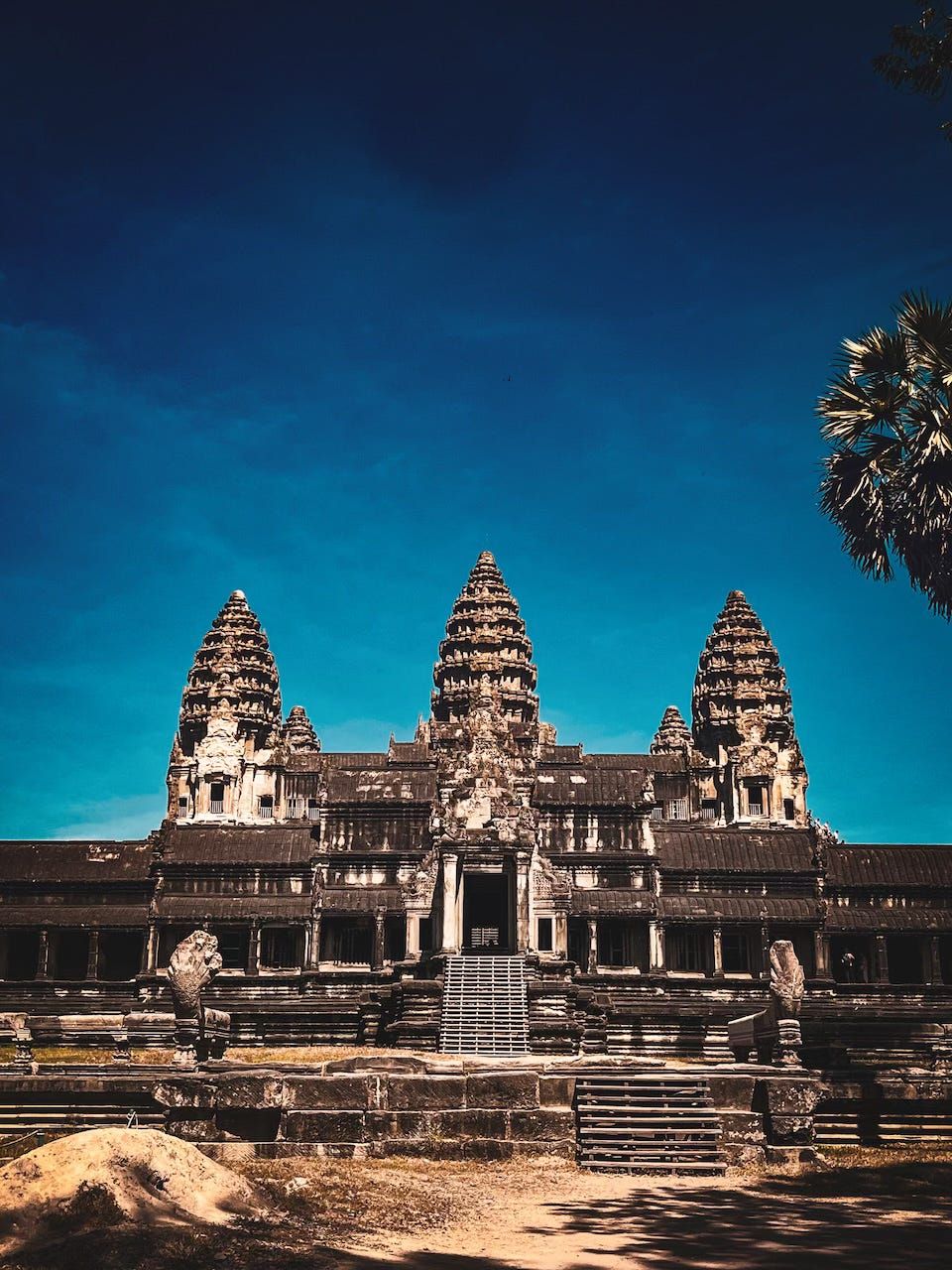
I had visited Angkor separately earlier in the week, so today was dedicated to the other temples in the region. That being said, Angkor Wat is the crown jewel of the Angkor temple complex and the largest religious monument in the world. Even passing by the surrounding lake in the early morning, with the mist slowly rising and sunrise sightseers making their way back to town for breakfast, it’s a magical sight and a great way to start a unique adventure.
📍 Prasat Kravan
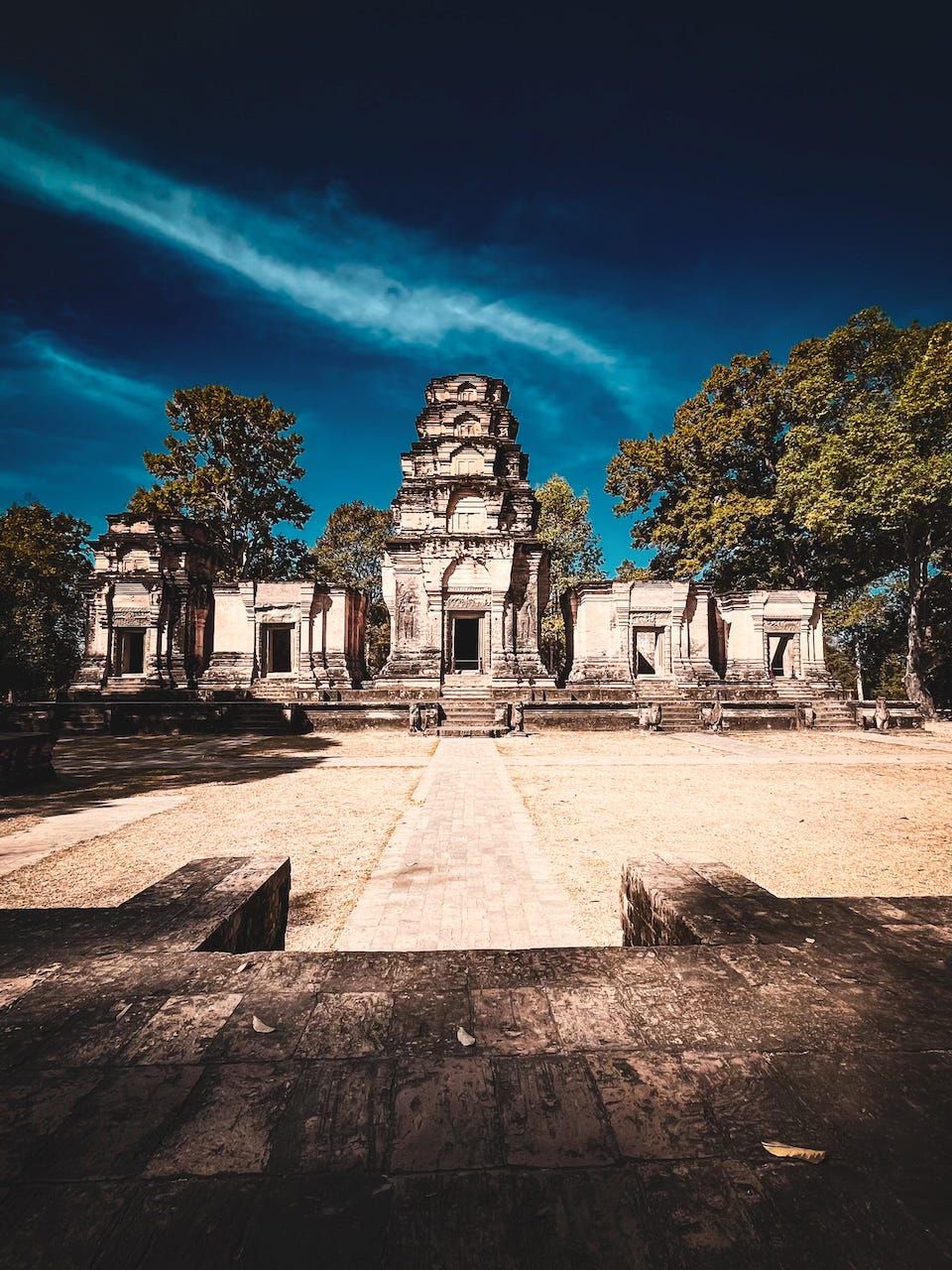
My first stop was Prasat Kravan, a unique temple featuring five brick towers aligned in a row. Built a thousand years ago, it stands out for its interior carvings, which depict scenes of Vishnu and Lakshmi. Although the exteriors are simple, the intricate bas-reliefs inside the central tower are a testament to the Khmer craftsmanship and eye for detail.
It was here I knew I was in for a good day, being the only person at the site.
📍 Banteay Kdei
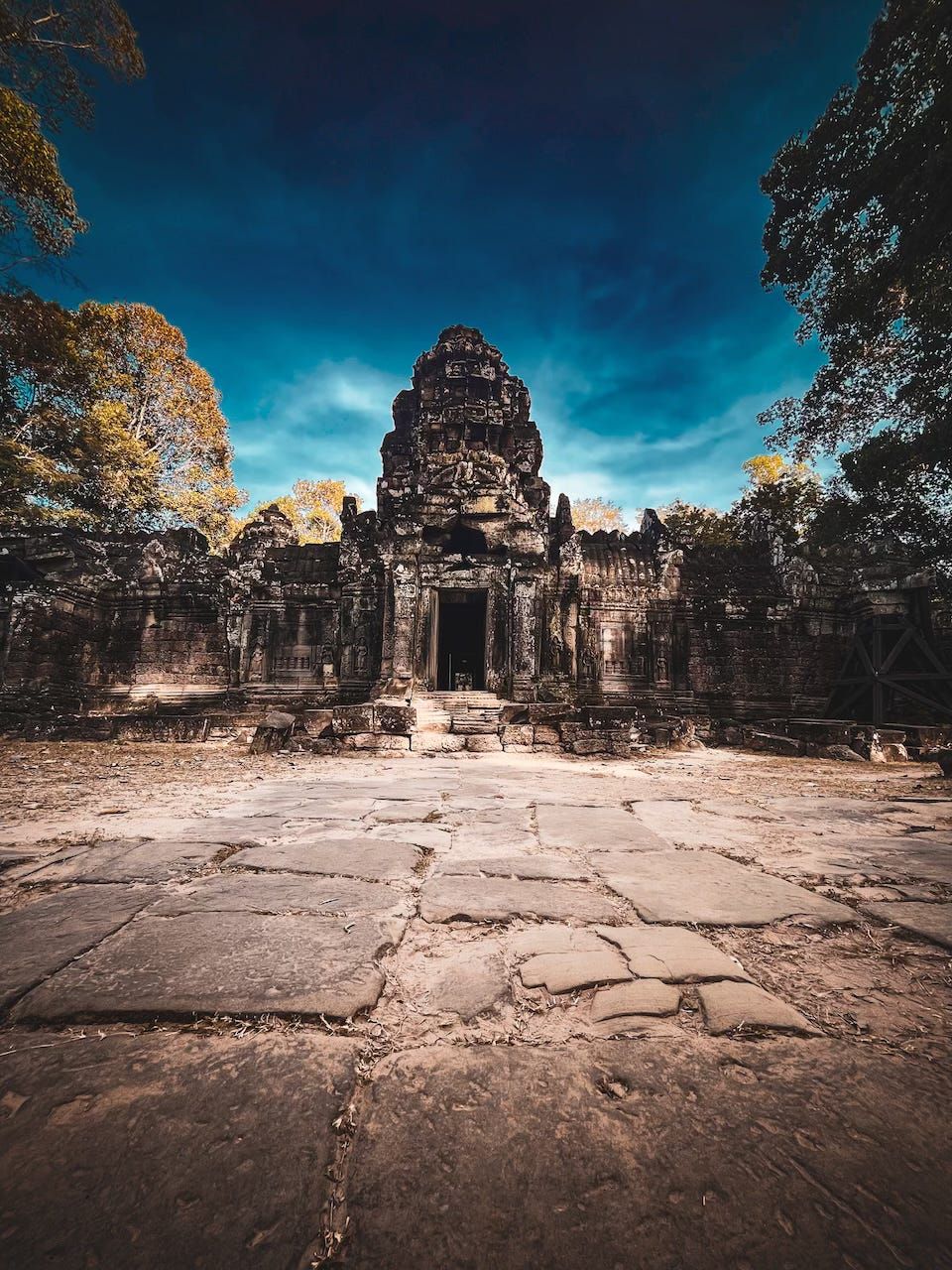
Banteay Kdei, meaning "Citadel of Chambers," is an intriguing Buddhist monastic complex from the late 12th century. Its sprawling layout is based on a central corridor running the full length of the site. The temple is adorned with beautiful carvings and sculptures, although it has suffered from structural weaknesses over the centuries, meaning the remaining towers are braced and some areas are restricted.
It shows the skill of the Khmer, I’m not sure anyone from that time would have imagined these monuments still standing dozens of generations later, although they may have hoped.
📍 Ta Prohm
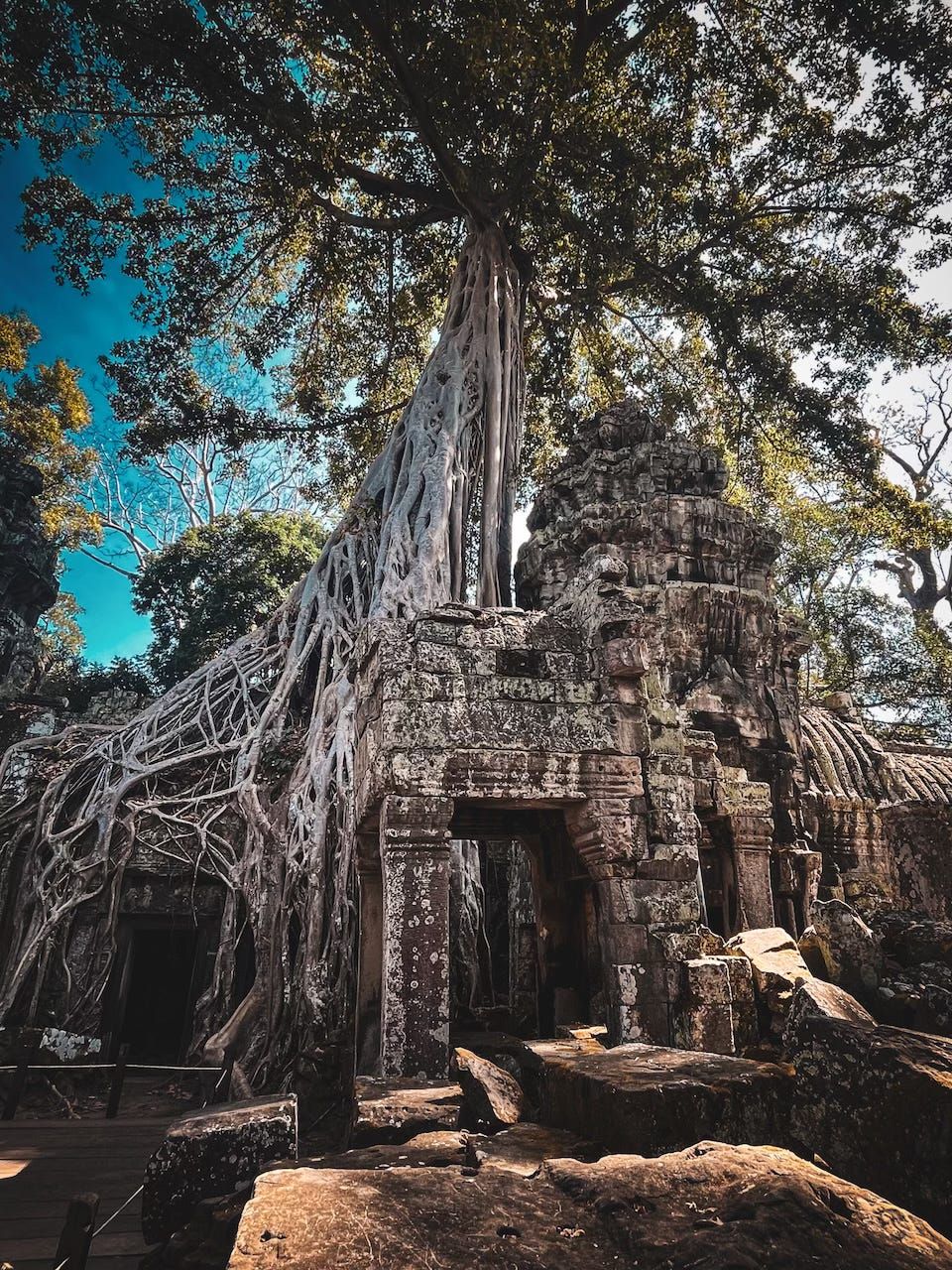
Made famous for its appearance in the movie Tomb Raider, Ta Prohm is an enchanting temple where nature has reclaimed its territory. The massive roots of towering trees intertwine with the temple's stone structures, creating an ethereal and otherworldly ambiance.
Sadly, this is now largely spoilt by queues for a quick Insta picture in one of two specific spots. For me, this serves as a great reminder to get off the beaten path every once in a while. Ta Prohm sits at odds with the serenity of other temples I visited this day, which could be enjoyed without the tourist crowds. This is the inaccuracy of the term “over-tourism”, which I see often used to reference a city or a country. Really, it’s only appropriate for specific sites, which do indeed suffer needlessly because of social media leading to everyone doing the same thing, at the same time.
Ta Prohm was built across the late 12th and early 13th centuries, making it one of the later Khmer templets, it served as a monastery and university. Now, it is facing an uphill battle to repair and preserve the outer walls which have fallen. The good news is that restoration work is well underway, led by Cambodians and leveraging technology and knowledge from the wider world.
📍 Pre Rup
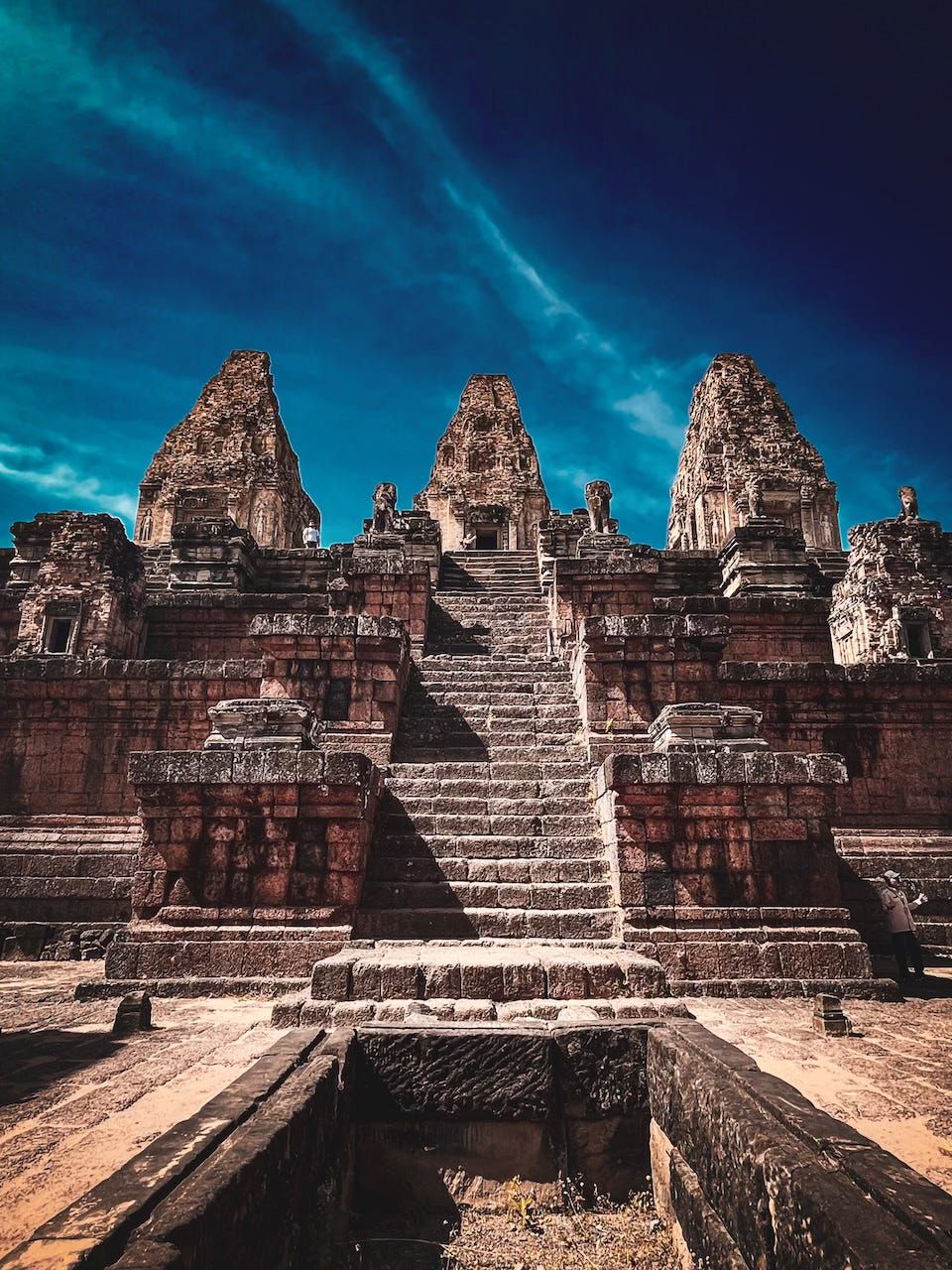
Pre Rup, a temple mountain dedicated to Shiva, was constructed in the 10th century and offers stunning views of the surrounding countryside. It is believed to have been used for royal cremations. The temple's warm-toned laterite and sandstone give it a distinctive appearance, especially during sunrise or sunset when the light enhances its reddish hue.
📍 Neak Pean
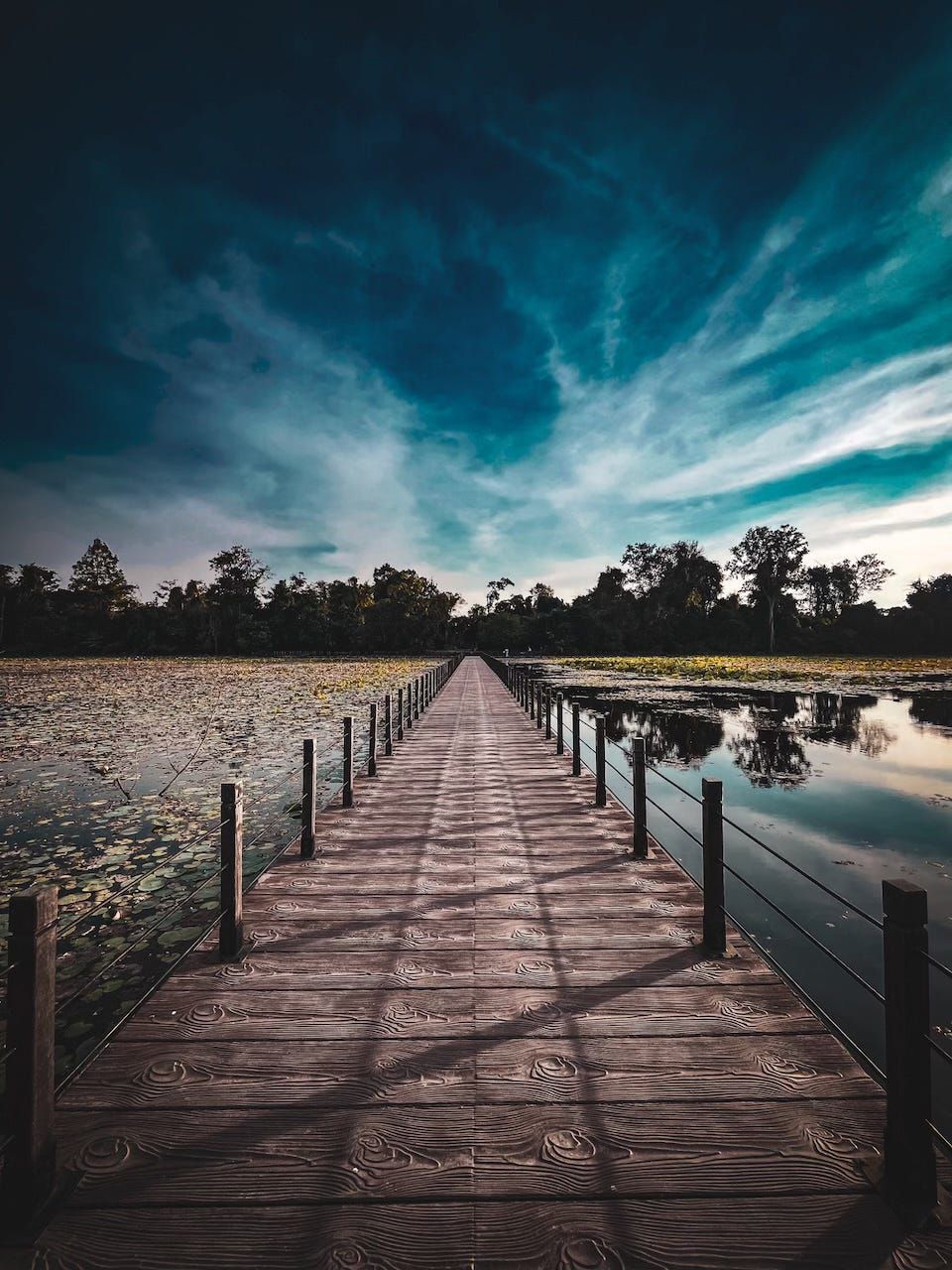
Neak Pean is one of the smallest temples, yet it was the one I was most fascinated to see, being situated on an artificial island within the Jayatataka Baray. Built by King Jayavarman VII in the late 12th century, it is designed as a representation of the mythical Himalayan lake Anavatapta. The central sanctuary is surrounded by four smaller ponds, symbolizing water, earth, fire, and wind. This was the reason I chose to cycle the Grand Circuit, giving me the time to be able to enjoy each location in my own time.
Arriving at sunset was almost planned to perfection. Crossing the walkway in the stillness of the evening air was a magical experience. By this time, the crowds have shrunk, mostly migrating towards Angkor Wat, so I was able to enjoy it in solitude.
📍 Angkor Thom
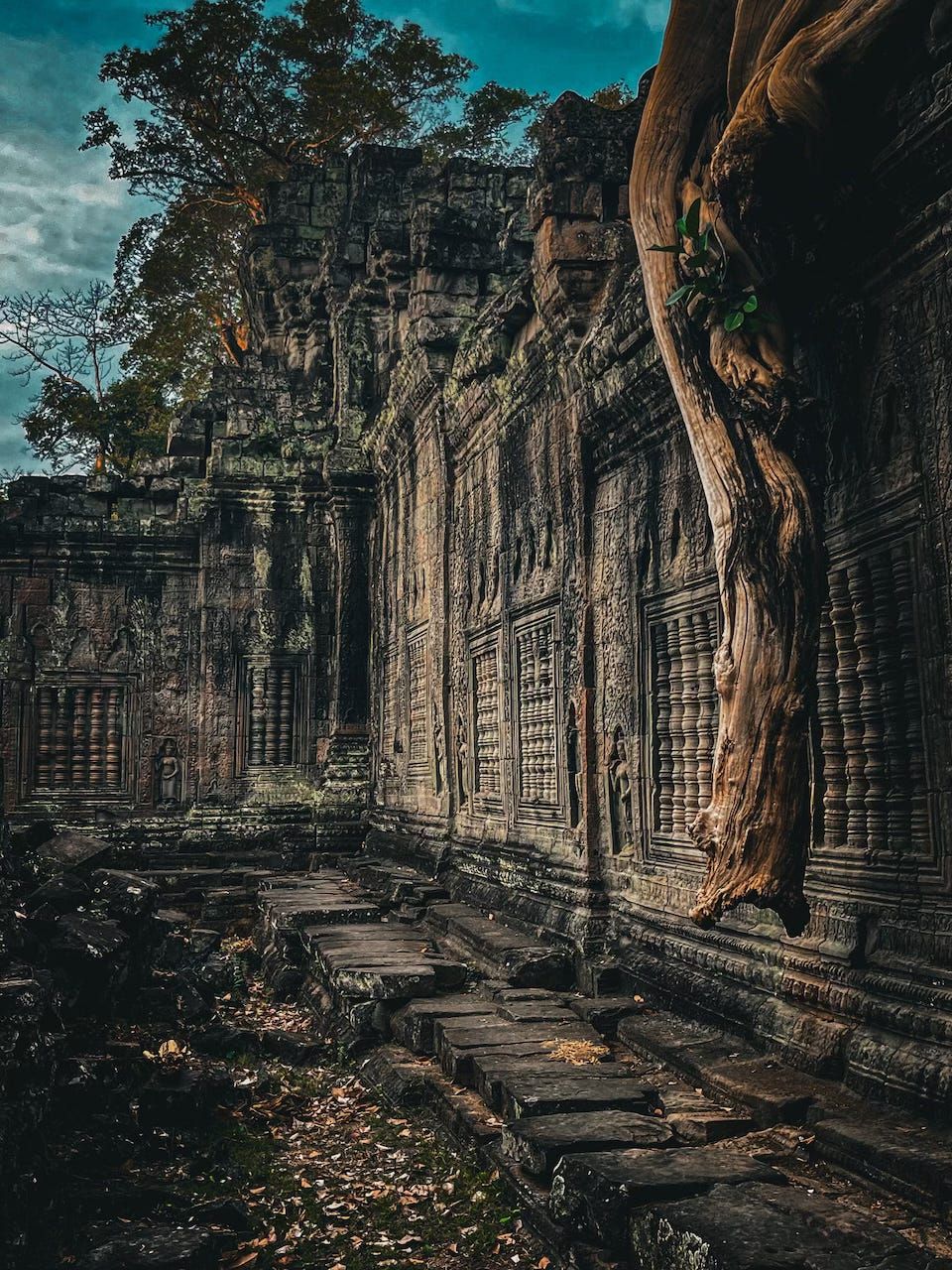
Angkor Thom, meaning "Great City," was the last and most enduring capital of the Khmer Empire. Arriving through Angkor Thom's massive gates and walls, adorned with intricate carvings, makes for an awe-inspiring visit. This was the final stop on my tour, I didn’t fully explore the area having arrived just after sunset.
Established by King Jayavarman VII in the late 12th century, it encompasses several iconic temples, including the Bayon, known for its smiling stone faces, and the Terrace of the Elephants.
Bonus Sites
📍 Cambodia Landmine Museum
I stopped at the Landmine Museum on the way to Banteay Srei, having had a recommendation on Threads to understand more about this side of Cambodia’s history and the effects it still has on everyday life now. The museum was founded by Aki Ra, an ex-child soldier in the days of the Khmer Rouge. It is his way to tell the world about the horrors American and Russian landmines have inflicted over the last 50-years.
Operating with a small entry fee ($6), the proceeds are used to clear landmines. Whilst clearing small, remote villages, Aki Ra began caring for wounded and orphaned children, bringing them back to be rehabilitated at the museum, helping to transform their lives. Several of those Aki Ra helped, continue to work there today.
Aki Ra also started Cambodian Self-Help Demining. By 2024, they have cleared over 9,000 square kilometres of land, helping to reduce the number of landmine injuries and deaths significantly, however it is clear there is still a lot of work remaining.
📍 Banteay Srei Temple
Banteay Srei, referred to as the "Citadel of Women," is renowned for its exquisite and intricate carvings in pink sandstone. Although located off the Grand Circuit, it is well worth the detour. I cycled the 12-miles each way and was not disappointed when I arrived.
This 10th-century temple is dedicated to the Hindu god Shiva and stands out for its elaborate and well-preserved decorative motifs. It is a pretty contrast to the surrounding lake and greenery of the trees. Personally, I think this is the most well-preserved of the temples and has undergone a lot of restoration to maintain for future generations.
📍 Koh Ker Temple
Further afield, Koh Ker is an impressive temple in a very remote part of Northern Cambodia. Make sure you’re aware of where this is ahead of time. The region Koh Ker resides in is 120 kilometres (75 mi) away from Siem Reap, so it will take 2.5-hours to reach, making this a full day out.
Tickets are $15 and bookable through the Angkor Enterprise website as a separate ticket to Angkor however, Koh Ker is another UNESCO World Heritage Site.
This area is a great example of how Cambodia is still recovering, there are 180 monuments, however only 20 or so can be visited by tourists as significant areas have not been de-mined.
Top Tips for the Tour
- Buy online: No Angkor Pass ticket offices open before sunrise, so if you want to make the most of your time in Siem Reap, then book ahead.
- Reverse it: The route I took was accidentally the “right” way around, with most of the organised tours running clockwise around the circuits, therefore the reverse helps minimise the crowds.
- Dress sensibly: These are religious sights and have deep meaning. Shoulders and knees should be covered. I kept a pair of trousers in my bag to throw over cycling shorts at each stop. It weighs nothing and my effort was appreciated by the attendants.
- Hydrate: If you visit in the dry season (November to April), expect no cloud cover and the temperature tops 30ºC, so suncream and water are a must-have. There are plenty of options along the routes for a refill too.
- Staying connected: Whilst travelling I have always used MobiMatter’s e-sim for every destination. In Cambodia I chose a single country e-sim and only cost £7 for 5GB over 30-days.
Other Activities Around Siem Reap
Siem Reap is not only about temples; there are plenty of other activities to enjoy. In my time there I was able to make the most of other interesting sights:
· Phare, The Cambodian Circus: Experience an evening of spectacular performances that combine traditional and modern circus acts, telling stories of Cambodian culture and history. Book online to avoid a sell-out and get there early and enjoy the food stalls pre-show. It is a 1-hour Cirque Du Soleil style-show, so no animals meaning it’s worry (and cruelty) free.
· Tonle Sap Lake: Take a boat tour to Southeast Asia's largest freshwater lake and visit the floating villages, where you can observe the unique lifestyle of the local communities. I went at sunset with the Siem Reaper Cycling Tour and every aspect was a fascinating experience.
· Old Market and Pub Street: In the centre of town this is a great place to explore the vibrant markets and nightlife of Siem Reap. Here you can shop for souvenirs (there is some exceptional artwork), try local delicacies (including several types of insect), and enjoy a lively atmosphere in one of many bars.
Accommodation Options
Siem Reap offers a wide range of accommodation to suit all budgets:
· Luxury: For those seeking opulence, the FCC Angkor by Avani and the Raffles Grand Hotel d'Angkor offer unparalleled luxury and service.
· Mid-Range: The Jaya House River Park and The Aviary Hotel provide comfortable stays with excellent amenities at a moderate price.
· Budget: For budget travellers, the Lub d Cambodia Siem Reap and Blossoming Romduol Lodge offer affordable yet cozy accommodations.
I stayed at the King Rock Boutique, and would be happy to go back. There is a phenomenal restaurant on the corner serving all sorts of Khmer delicacies.
The Grand Circuit of Siem Reap's temples offers an immersive journey through Cambodia’s legendary past, while the city itself provides ample opportunities for relaxation and exploration, ensuring a memorable travel experience. Whether you’re a history buff, an adventure seeker, or looking to unwind, Siem Reap has something to offer everyone.
On the map
Interests