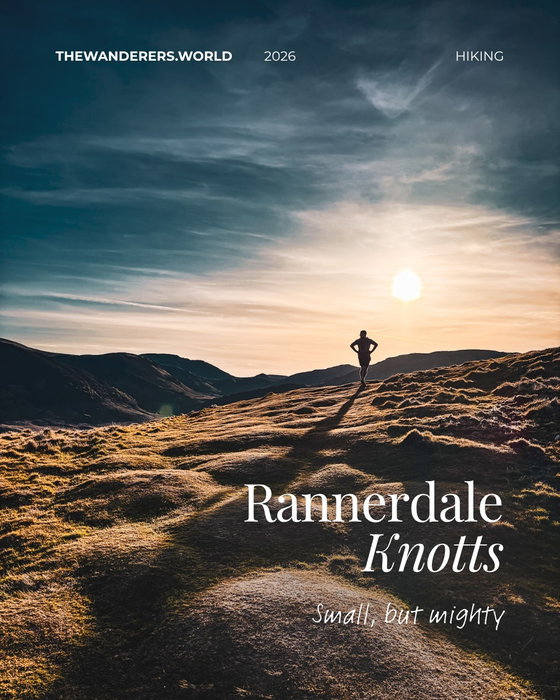
There’s a particular kind of Lake District walk that never makes it onto the glossy postcards. No dramatic ridge scrambles, no Instagram-famous tarns, no queue at the summit. Just you, a fence line, and a whole lot of open fell country that most visitors drive straight past on the A6. Grey Crag and Tarn Crag, sitting above the quiet valley of Longsleddale in the Far Eastern Fells, are exactly that kind of walk. And in February, with snow on the ground and not another soul in sight, they were absolutely brilliant.
Getting There
Longsleddale is one of those places you have to mean to go to. There’s no shortcut through it, no reason to pass that way unless you’re heading specifically for the valley. You turn off the A6 at Garnett Bridge, about four miles north of Kendal, and follow a narrow single-track lane north for four and a half miles until the tarmac runs out at Sadgill.
Sadgill is a small working farm at the valley head where the road simply stops. There’s room for a handful of cars at the bridge, get there early, especially at weekends. No facilities, no café, no signal. Just a gate onto the open fell and a wall of crags above you.
The Route
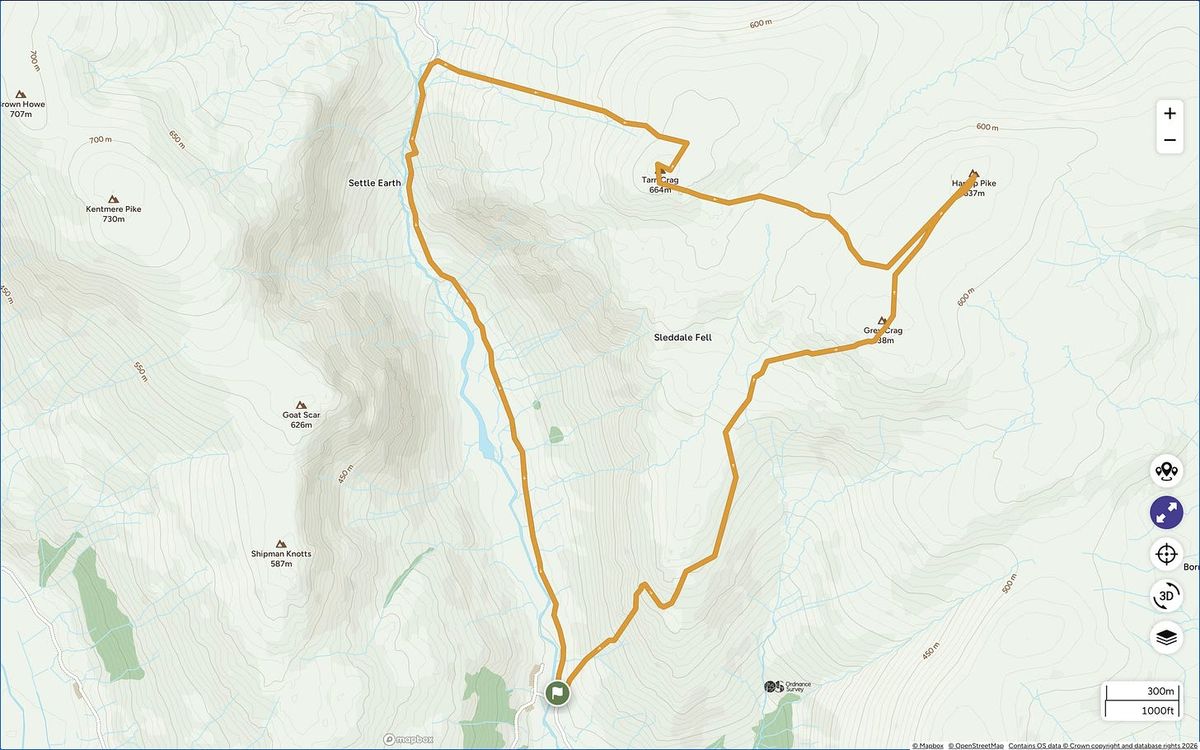
The route starts with an immediate ascent. From Sadgill Bridge, head through the gate into the access land below Great Howe, and begin climbing east through steep, bracken-covered fellside towards an obvious rocky gully. In summer this is waist-deep bracken. In February, with snow underfoot, it was frozen, crunchy, and oddly satisfying.
The gully, known locally as Easy Gully, a name that flatters it slightly on a winter morning, brings you up through the crags onto the broad plateau of Great Howe. From there, the route follows a vague path and a fence line northeast, first to Grey Crag (638m), then on across open, sometimes boggy ground to Tarn Crag (664m).
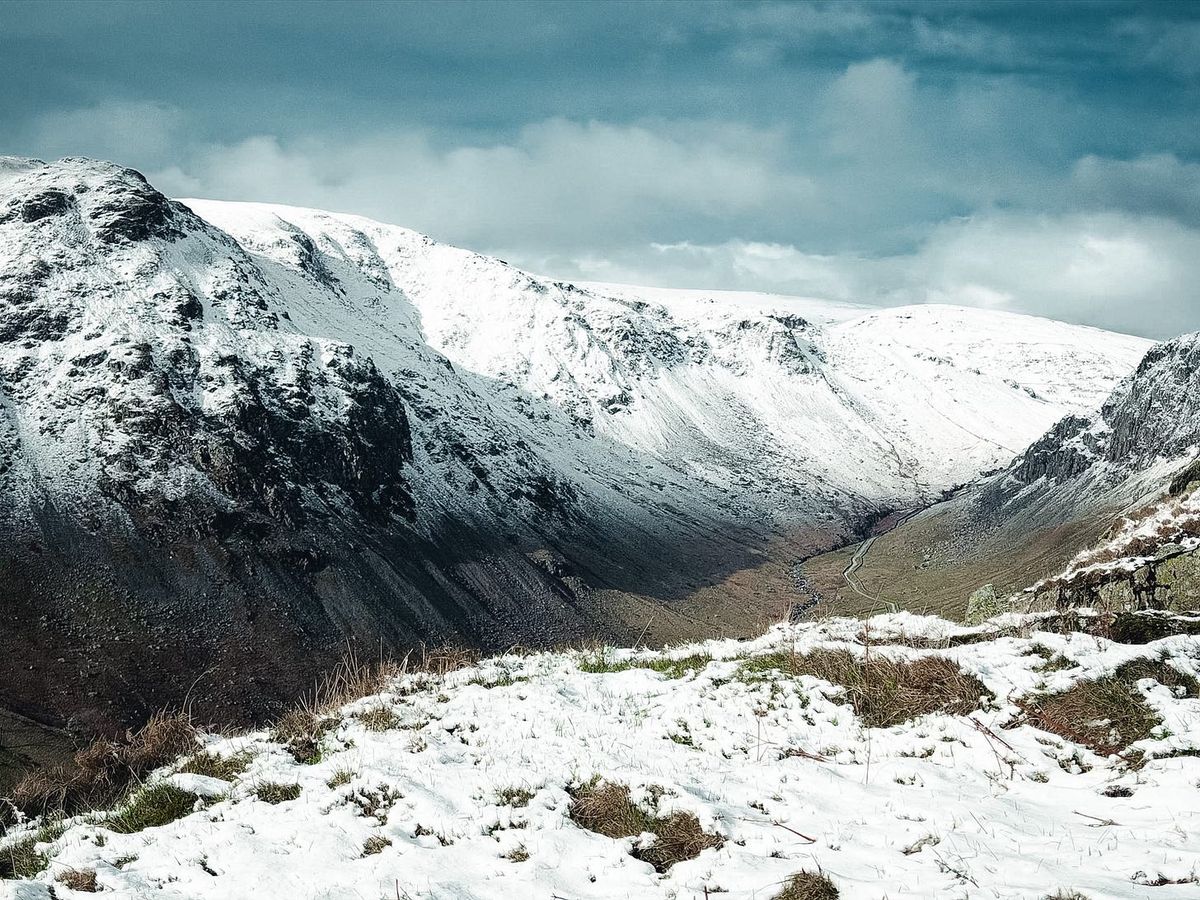
In snow, the boggy sections were mercifully frozen solid. The whitened fell stretched away in all directions, and the only sound was the wind and our boots crunching through the crust. The absence of any path at all in places was either liberating or mildly alarming, depending on your outlook. I decided it was both.
Tarn Crag’s summit is marked by something genuinely unusual: a tall, cleft stone survey pillar erected by Manchester Corporation’s engineers in the 1930s during the construction of the Haweswater Reservoir. It looks like a monument to something important, but it was purely functional; a sightline post for surveying the aqueduct route that still carries water from Haweswater to Manchester today. It’s an odd thing to encounter on a remote fell top, and all the more memorable for it.
The Views
Grey Crag sits at the very eastern edge of the Lake District, on a kind of geographical threshold. To the west are the rocky ridges of the Kentmere Horseshoe and the familiar Lakeland skyline. To the east, the ground softens into rolling Pennine moorland; vast, desolate, and beautiful in its own way. Wainwright wasn’t especially kind about these fells in his guides, finding them too Pennine-ish for his tastes. He did, however, concede the eastern panorama. He was right to.
From Tarn Crag in snow, with Blencathra visible to the north and the Kentmere Horseshoe lit up to the west, the view was everything a winter fell day should be.
A Word on the Terrain
Be warned: the section between Grey Crag and Tarn Crag can be extremely boggy in normal conditions. In snow, this is not a concern. In anything else, expect your boots to be tested. The descent back down to Sadgill via Brownhowe Bottom is well-marked and straightforward, following the old drover’s road back down the valley.
The paths on the open moorland are faint in places. A map and compass, or a downloaded map (such as those on the Wainwright Companion app), are genuinely useful here, especially in poor visibility.
After the Walk
There are no pubs in Longsleddale itself (the valley has a population of about 73, which rather answers that question). Your best bet is to drop back down to Kendal, about 20 minutes south, and head for the Strickland Arms on Stonecross Road, a solid, unpretentious local pub with good beer and the kind of welcome you want after a cold February day on the fells.
On the map
Interests