The Dolomites are the most photographed mountains in Europe, and you already know the pictures before you arrive. The tilted ridgeline. The impossibly blue lake with the little wooden boats. The three peaks at sunrise. On our first trip we tried to tick all of them off in a rush and learned the hard way that the photo is the easy part. The parking, the crowds and the weather are what actually decide your day.
So this is the honest version. Five spots, why they look the way they do, how to reach each one, when to go so you are not sharing the view with three hundred other people, and whether we think it is worth it. Some of these are a five minute stroll from a cable car. One is a proper half day walk. We will tell you which is which.
One thing before you start: you need a car. Public transport in the Dolomites exists, but it will cost you hours you do not have, and several of these valleys either close to traffic in high season or fill their car parks by breakfast.
1. Seceda, the tilted ridgeline
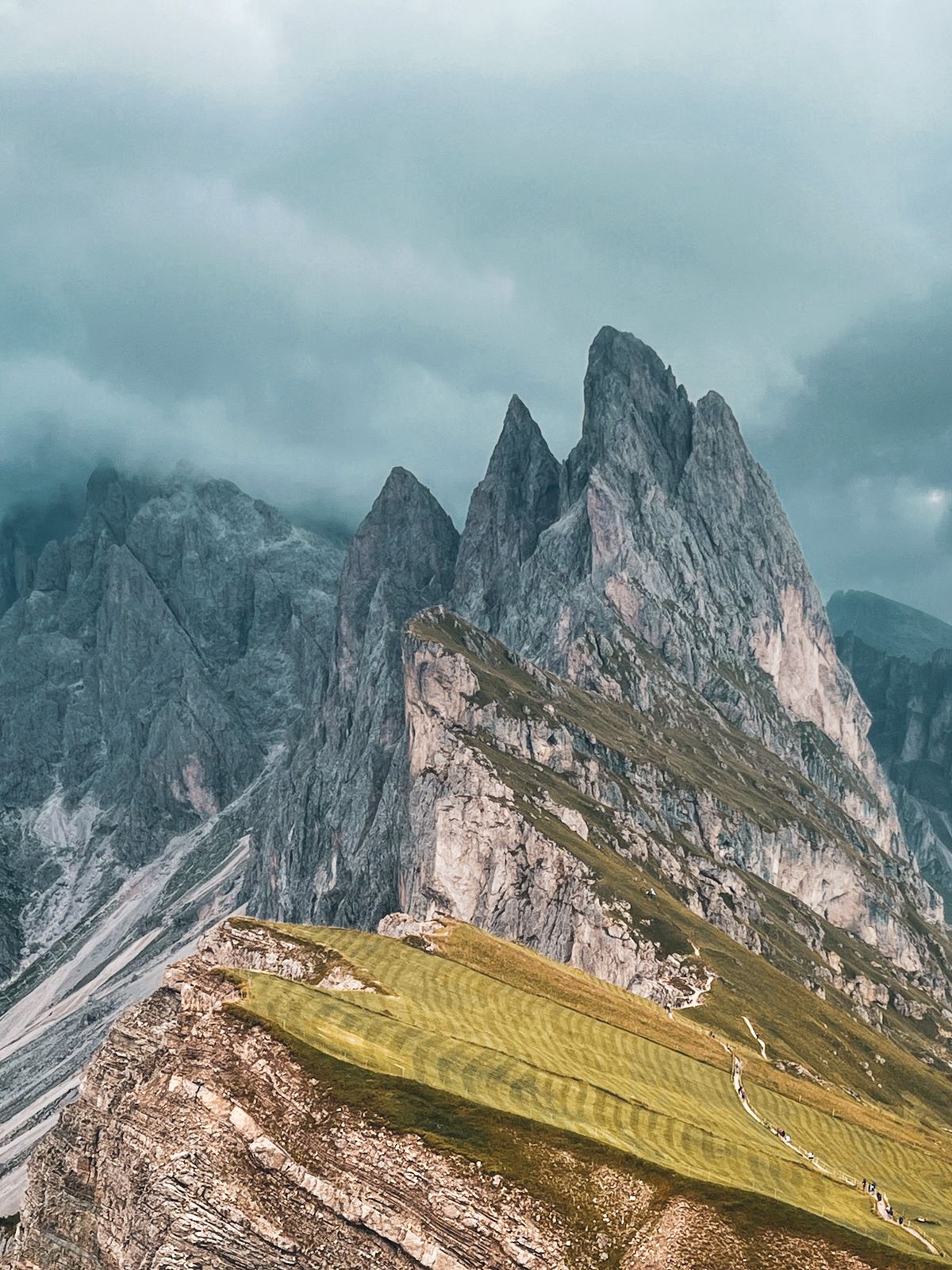
This is the one that looks fake. A long saw of grey rock tipping away from you, green meadow rolling up to meet it, the jagged Odle peaks standing behind. It is the most shared view in the whole range, and in person it genuinely lives up to it, which we honestly cannot say for all of them.
The shot: the ridge from the top of the cable car, with the summit cross and the drop framing the Odle group. Walk five to ten minutes along the path from the lift and it opens right up.
How to get there: drive to Ortisei in Val Gardena, park in one of the central garages, and take the Ortisei to Furnes to Seceda lift chain to the top. It is not cheap (budget around 80 euros return per person), but it does all the climbing for you and drops you at roughly 2500m.
When to go: first lift, no question. By late morning the ridge has a steady line of people on it and the light goes flat. Clear mornings in June and September are the sweet spot. Cloud sits on the ridge far more often than the photos admit (as ours prove), so keep a spare morning if your trip allows it.
Worth it? Yes. Of everything on this list this is the one we would go back for tomorrow. Even with people about, the scale of it will not fit inside a phone screen, which is the best kind of problem to have.
2. Lago di Sorapis, the milky blue lake
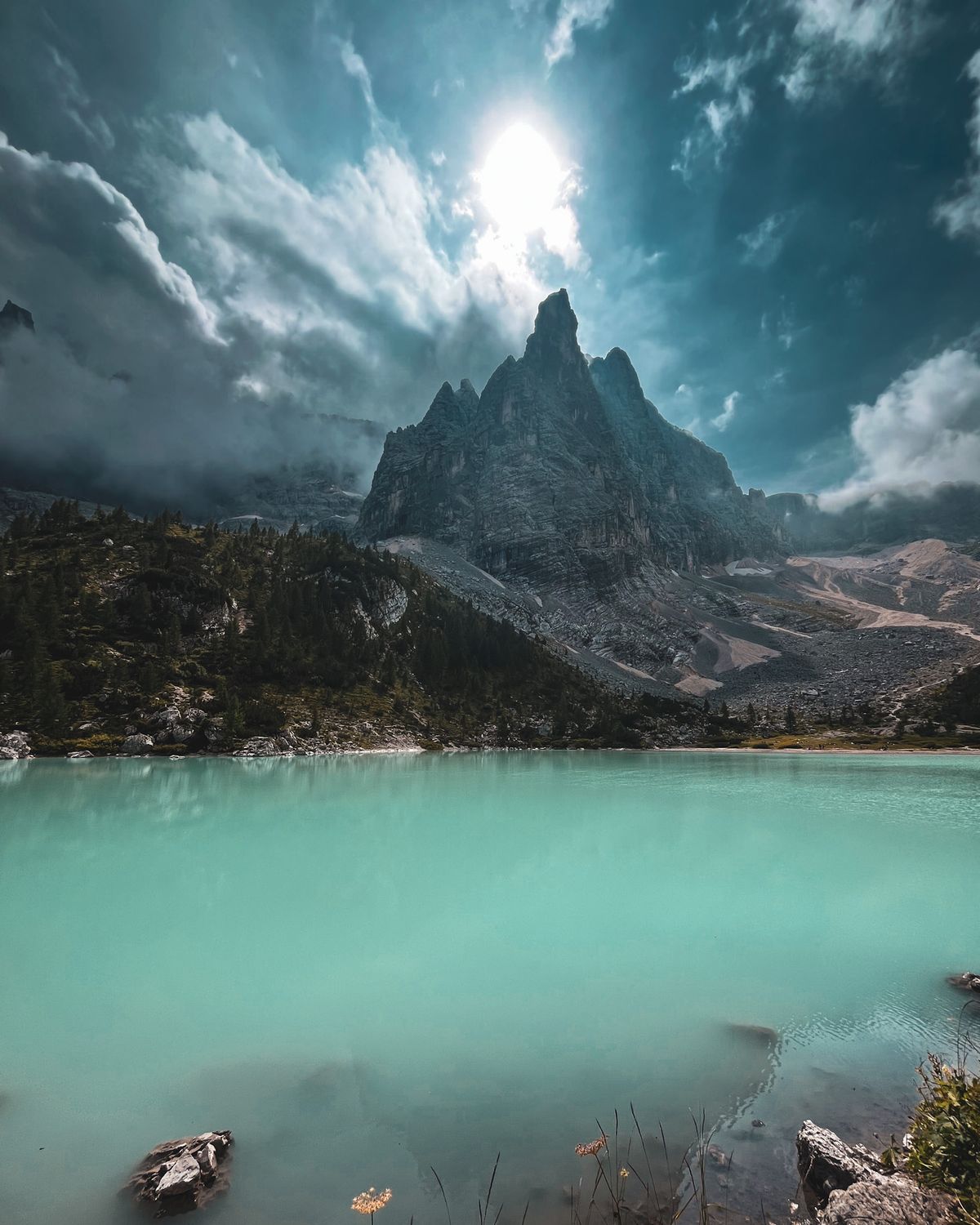
The colour looks edited and it is not. Sorapis is a strange, opaque turquoise that comes from glacial rock flour suspended in the water, sitting in a bowl under the Sorapis massif. It is the hardest to reach on this list, and that is exactly what keeps it just about bearable.
The shot: the lake with the grey spires rising behind it, ideally with a little morning light on the peaks.
How to get there: this is a walk, not a viewpoint. Park at Passo Tre Croci on the road between Cortina and Misurina and take path 215. It is around 3 to 3.5 hours return, with a bit of exposure on ladders and cables near the start. Nothing technical, but not one for wobbly ankles or small children. Wear proper boots.
When to go: early, and midweek if you possibly can. The car park at Tre Croci is small and fills by mid morning in July and August. The lake also loses its best colour once the sun climbs high, so the people who leave at first light get both the parking and the photo.
Worth it? If you like walking, yes. If you were hoping to drive up and point a camera, this is not your spot, and we would send you to Braies instead. We would file the effort here as Moderate, mostly for the distance and the cables rather than any real climb.
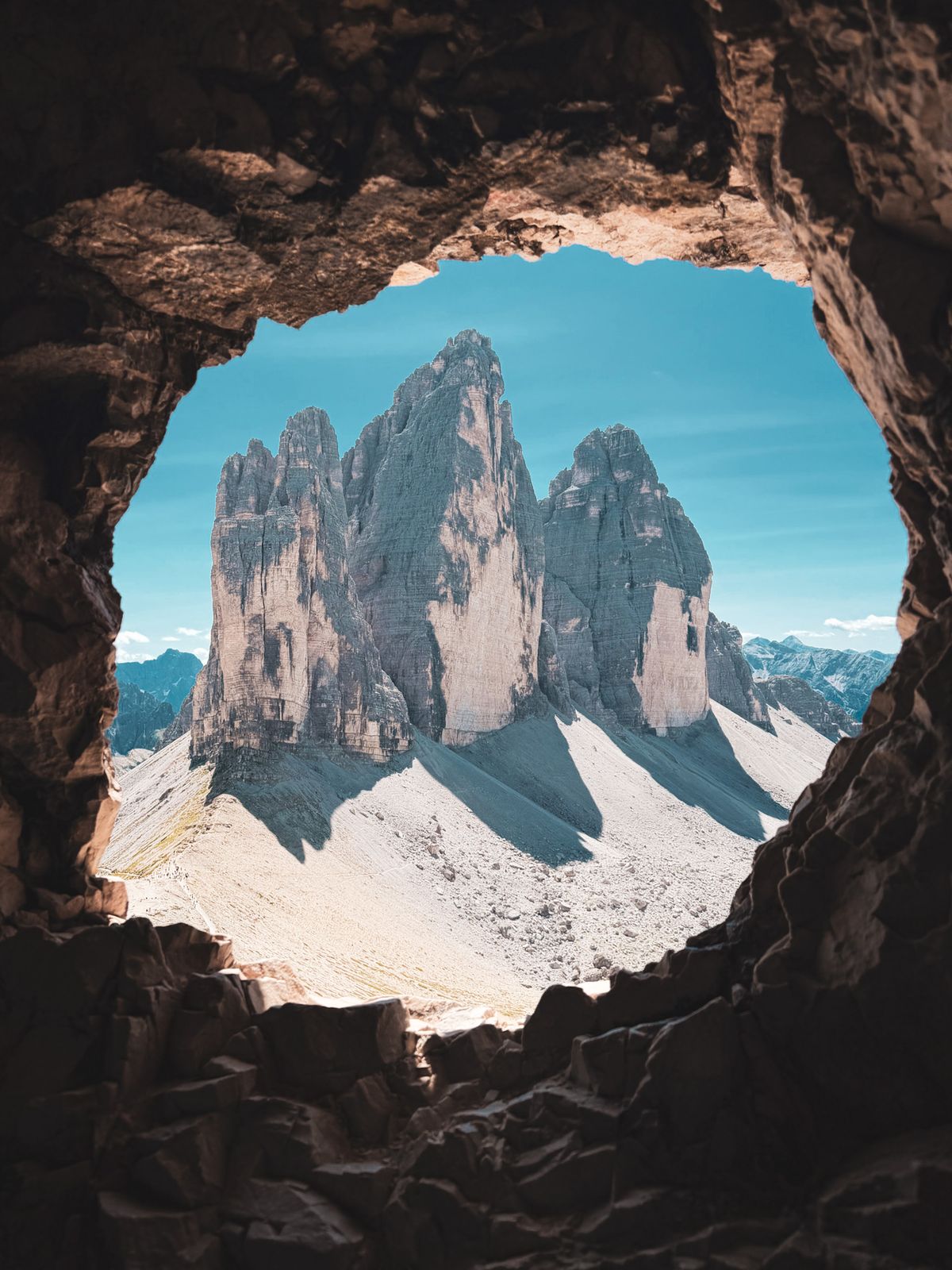
3. Tre Cime di Lavaredo, the three peaks
The postcard of the entire range. Three enormous rock towers standing in a row, seen at their best on the loop that runs around behind them. It is busy, it is a toll road just to get near, and it is still one of the great mountain walks in Europe.
The shot: the three peaks from the north side near Rifugio Locatelli, which is the view most people never actually earn because they turn back at the first hut.
How to get there: pre-book parking and drive the toll road up from Misurina to the Rifugio Auronzo car park, which costs 40 euros per car. Alternatively you can take one of the the tourist buses. From there the full loop is about 10km and takes 3 to 4 hours at a gentle pace.
When to go: early morning or late evening to avoid the crowds. We wrote a whole guide on doing this one without the queues, because the timing really is everything here. Read our full Tre Cime guide.
Worth it? Completely, as long as you do the loop rather than the car park selfie. Moderate underfoot, long but never steep or exposed on the main circuit.
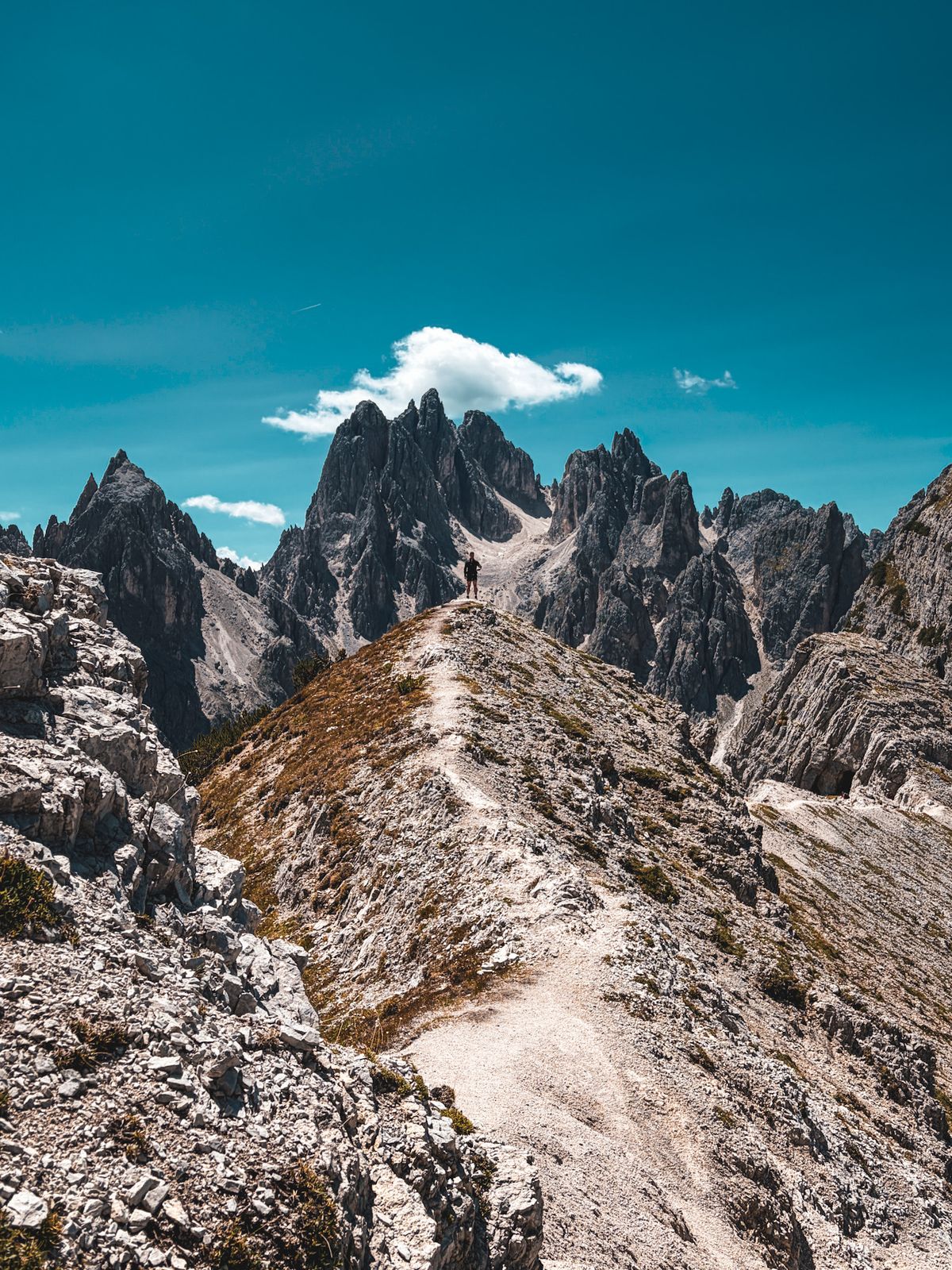
4. Cadini di Misurina, the viewpoint that broke Instagram
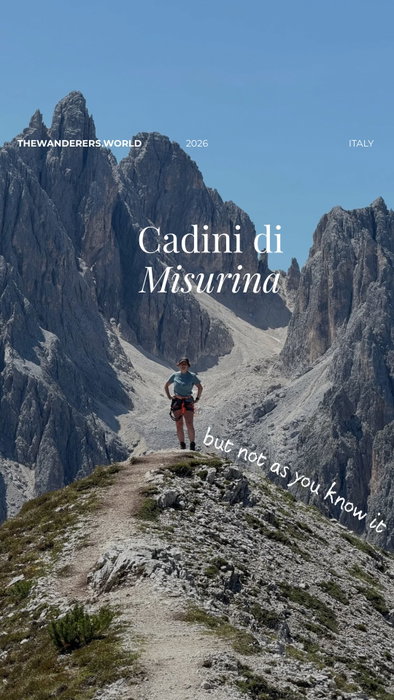
You have seen the photo: a lone figure on a rocky nose, looking out at a fan of impossibly sharp spires. That is Cadini di Misurina, and it sits a short walk from the very same Tre Cime car park, which is why you can bag two of this list in a single visit.
The shot: the spires from the marked viewpoint on path 117, usually with a person on the rocks for scale.
How to get there: from the Rifugio Auronzo car park, follow the path signed toward Rifugio Fonda Savio for around 30-minutes. The famous viewpoint is a narrow rocky ledge, so watch your footing. Be prepared for a wait, by mid-morning there is usually a 30-40 minute queue for ‘the shot’.
When to go: sunrise is the famous one, and it is worth the alarm if you are staying near Misurina. Otherwise pair it with an early Tre Cime loop and do it on the way in.
Worth it? Being able to combine it with Tre Cime makes the toll road money stretch further, but probably not on it’s own unless you’re hiking up and tackling the Santiero Bonacossa Via Ferrate as well.
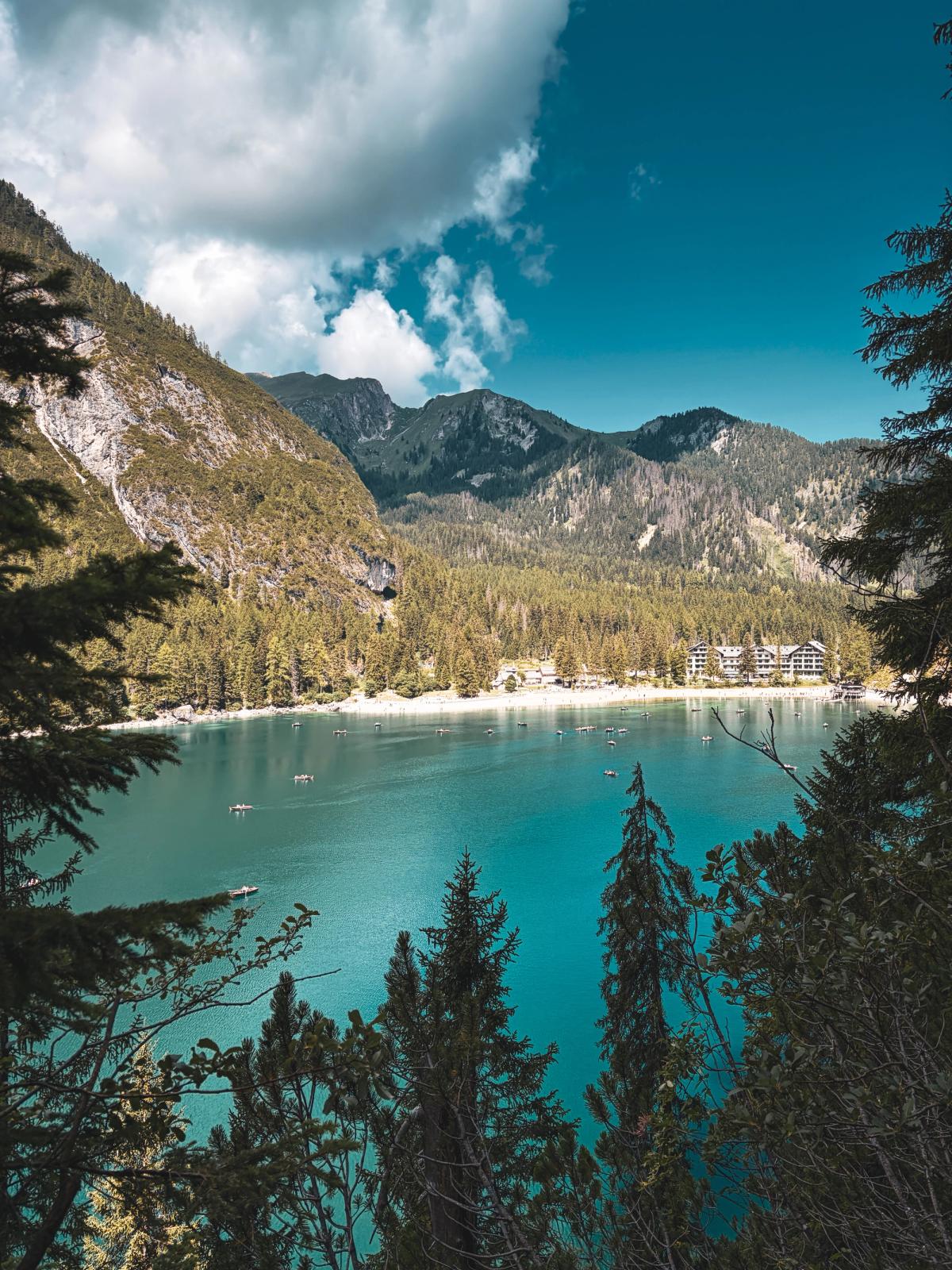
5. Lago di Braies, the lake with the boats
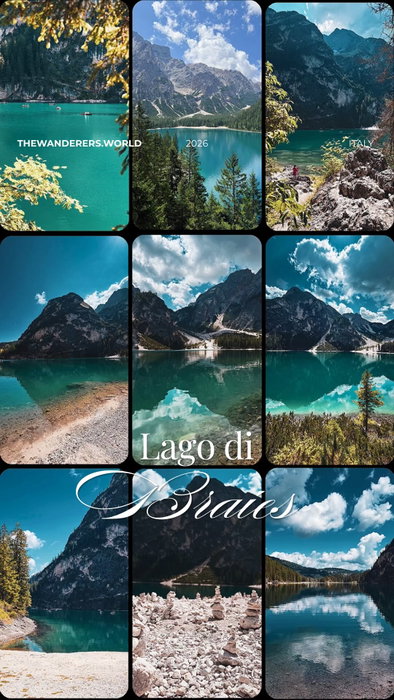
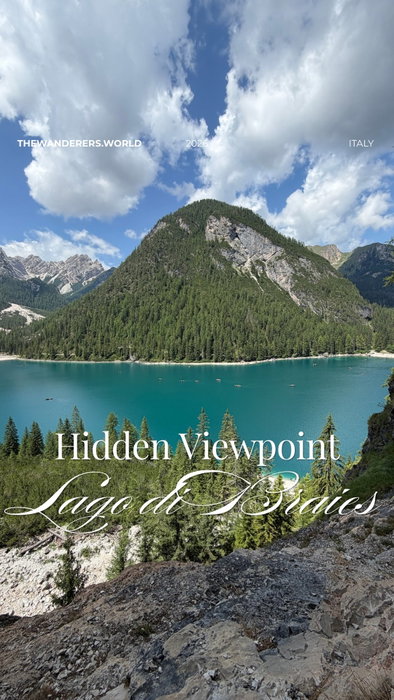
The most famous and the most crowded. A deep green lake under a wall of rock, an old wooden boathouse, a fleet of little rowing boats lined up along the shore. It is beautiful, and it is also the spot where the honest version matters most, because the reality at 11am in August is a car park the size of a small town and a queue for the boats.
The shot: the boathouse and the boats with the Seekofel rising behind, taken from the little jetty.
How to get there: drive into the Braies valley from Villabassa. In summer the road is regulated, so you either arrive before around 9am, after around 4pm, or you book a slot in advance. Turn up at midday without a booking and you may be turned back at the barrier. Parking is right by the lake once you are through.
When to go: first thing, and we mean that here more than anywhere. Early morning gives you still water for the reflection, softer light, and a boathouse that is not three deep with tripods. It is a completely different lake at 7am to the one you meet at lunchtime.
Worth it? Yes, but only early. We wrote a full guide to Braies, covering the boats, the walk around the shore and where to stay nearby. Read our full Lago di Braies guide. It is also featured in our free Essential Dolomites guide if you would rather have the whole thing as a PDF.
Doing all five in one trip
You can, and we have. The catch is that they are spread across two different valleys. Seceda sits in the west, around Val Gardena. Sorapis, Tre Cime and Cadini cluster in the east near Cortina and Misurina, which is handy, because those three can all be done from one base. Braies sits north of Cortina, an easy morning from either side.
If we were planning it fresh, we would base near Cortina or San Vigilio for the eastern four, and give Val Gardena its own day or an overnight for Seceda. Four full days is comfortable. Three is doable if the weather plays along and you are happy with early starts. Two is a highlight reel, but you will spend most of it driving and not experiencing.
Whatever you do, build in a spare morning. The Dolomites make their own weather, and the difference between the photo and a flat grey wall is often just which day you happened to show up.