And whilst the colourful advertising boards of Shibuya, the craziness of Akhihabara and the busy, bustling streets around the city will make your trip feel complete, there is so much more to Tokyo that you think.
Hidden behind Tokyo’s modern exterior, is a past that feels enchanting and mystical to western travellers.
So although I loved visiting the modern side of Tokyo and immersing myself in the current culture of the city, my favourite part of our time there was taking in the gardens, shrines and backstreets of old Tokyo. Specifically, Sensō-ji, Koishikawa Korakuen and Omoide-Yokochō.
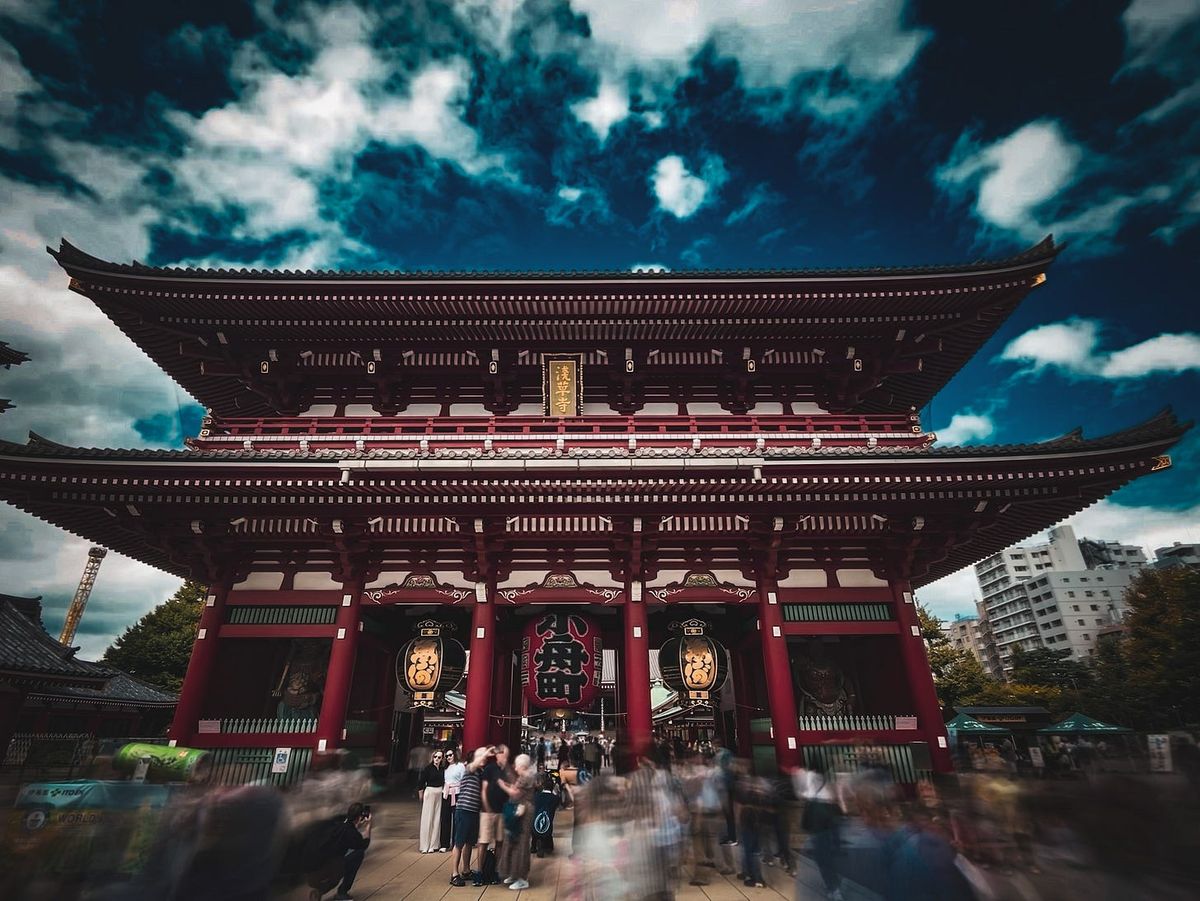
Sensō-ji
Sensō-ji is Tokyo’s oldest temple.
Located in the Asakusa district, you get a real feel for old Tokyo as you pass under the Kaminari-mon Gate after exiting the station here. Although the original gate was destroyed by a fire in the 1800s, the current gate has welcomed visitors to the temple since 1960 and is guarded on the right by Fūjin the god of wind and on the left by Raijin the god of thunder (hence the name Kaminari-mon, the Thunder Gate).
Beyond the gate is Nakamise-dōri, one of Japan’s oldest shopping streets and a bustling omotesandō that leads visitors to the temple at Sensō-ji. Why have a shopping precinct within the temple boundary I hear you ask? Well, during the Edo period travel was restricted to religious pilgrimages. Which meant destinations like Sensō-ji became popular with those looking to travel. Naturally this attracted vendors, a tradition that is still visible today as store owners here look to feed hungry travellers!
Over the years, the Nakamise at Sensō-ji has had many ‘faces’, having been ravaged by earthquakes and war, but despite being built on a more modern concrete structure to help protect it, the 80+ shops here are traditionally decorated with colourful lanterns and use the iconic green tiles on their rooftops. Allowing you feel as though you have stepped back in time as you enter.
As you pass through, you can treat yourself to colourful Imo Yokan (traditional, brightly coloured sweets made from sweet potato paste) from Funawa or Ningyo-yaki (a soft baked cake filled with sweet bean paste) from Kimura-ya before leaving the hustle of the sando behind you and you enter Sensō-ji via the Hōzō-mon gate.
It’s at this point that the grandeur of Sensō-ji hits you.
The two storey inner gate features a pair of 2500kg ‘warajii’ straw sandals that stand over 4m tall as a symbol of the power of Nio, a fierce Buddhist guardian deity.
To the left is the temple's five storey pagoda, a stunning structure that shines brightly in both the daytime sun and when underlit on an evening, as it becomes a beacon in the night sky of Asakusa.
Ahead of you is the Hondō.
As you make your way through the crowds towards the main hall of the temple, a quiet calmness replaces the hustle and bustle of the Nakamise in the distance.
The scent of incense hangs heavy in the air.
And as you ascend the stairs into Kannon Hall, time appears to stand still for a moment.
It’s here where throngs of locals will queue to pray to the Kami (Shintō Gods) bowing deeply and clapping twice, before joining their palms whilst silently speaking to the gods and concluding their prayer with another solemn bow before exiting the hall.
There are many dō to explore at Sensō-ji, and we comfortably spent a morning wandering around the temple grounds. However, if you’re running low on time there is one activity you must make time for during your visit.
Drawing an omikuji; your fortune.
Sensō-ji offers these in English for international travellers, making the experience of having your fortune told by the gods an ‘easier’ one (and also means that Google Translate can have a few hours off).
But be warned, Sensō-ji is famous for delivering negative fortunes to visitors … So if like me you get a less than positive omikuji, simply fold it up and tie it to the rack. Leaving your bad fortune at the temple.
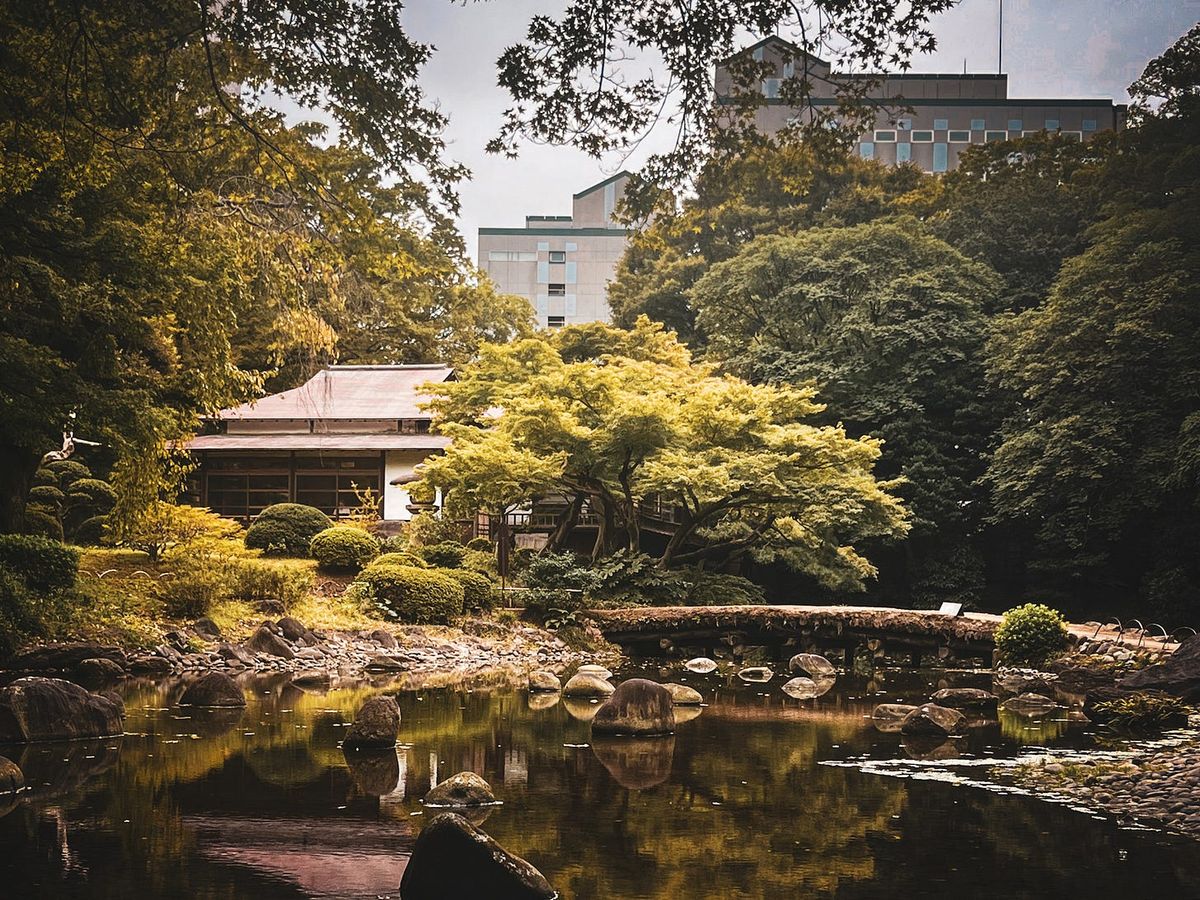
Koishikawa Kōrakuen
There are many gardens and green spaces in Tokyo.
However, Koishikawa Kōrakuen is one of the most prestigious examples from the Edo period that you will find in the city … and it’s right next door to the Tokyo Dome attractions!
Getting to the gardens here couldn’t be easier as it is less than a 10-minute walk from both Kōrakuen and Suidōbashi stations, which are served by the metro & local train lines from Tokyo Station.
Entering the garden via the East Gate, the first site you are greeted by is the Kara-mon Gate which sits on the opposite side of the Uchi-niwa pond. Known as the official entrance to the garden, the original Kara-mon was burnt down in an air raid in 1945 and it wasn’t until 2019 that work began on constructing a replacement.
The Kara-mon you see today is a replica of the one lost during WWII and was built using traditional carpentry techniques, giving visitors an opportunity to marvel at the structure that had stood tall for over 300-years before its demise.
Designed as an ‘excursion garden’, locals would visit Koishikawa Kōrakuen as a form of escape from daily life during the Edo period and as you meander along the Nobedan and around the central pond, you will see that this is something that is still done today. With locals using the garden as a space to enjoy in between meetings, have lunch or to simply catch up with friends.
And although Koishikawa Kōrakuen is probably best known for its Spring & Autumn foliage, it is also home to a number of Kyō (bridges) too.
The most famous of which is undoubtedly the full moon bridge of Engetsu-Kyō.
Set back from the ponds and groves, Engetsu-Kyō is nicknamed the full moon bridge on account of its reflection in the water below and as you approach it, you see the ‘moon’ become complete beneath its impressive stone structure.
Following the trail, passing the Tokujin-do temple, you will next see the photogenic and pristine red lacquer of a ‘guzei’ bridge. As well as being a beacon of joy thanks to their bright colour, they are also symbolic of the passing from the physical world to paradise … and the name used here Tsūten-Kyō literally means ‘bridge of heaven’.
And finally, as you make your way towards the West Gate, you will see Togetsu-Kyō. An earthen, stone bridge, Togetsu-Kyō took its name from a famous Waka poem about the view of the moon moving across the sky (in the same way that visitors used it to cross the water below) and pays homage to a bridge of the same name that has connected central Kyoto and Arashiyma since the 8th century
Omoide-yokochō
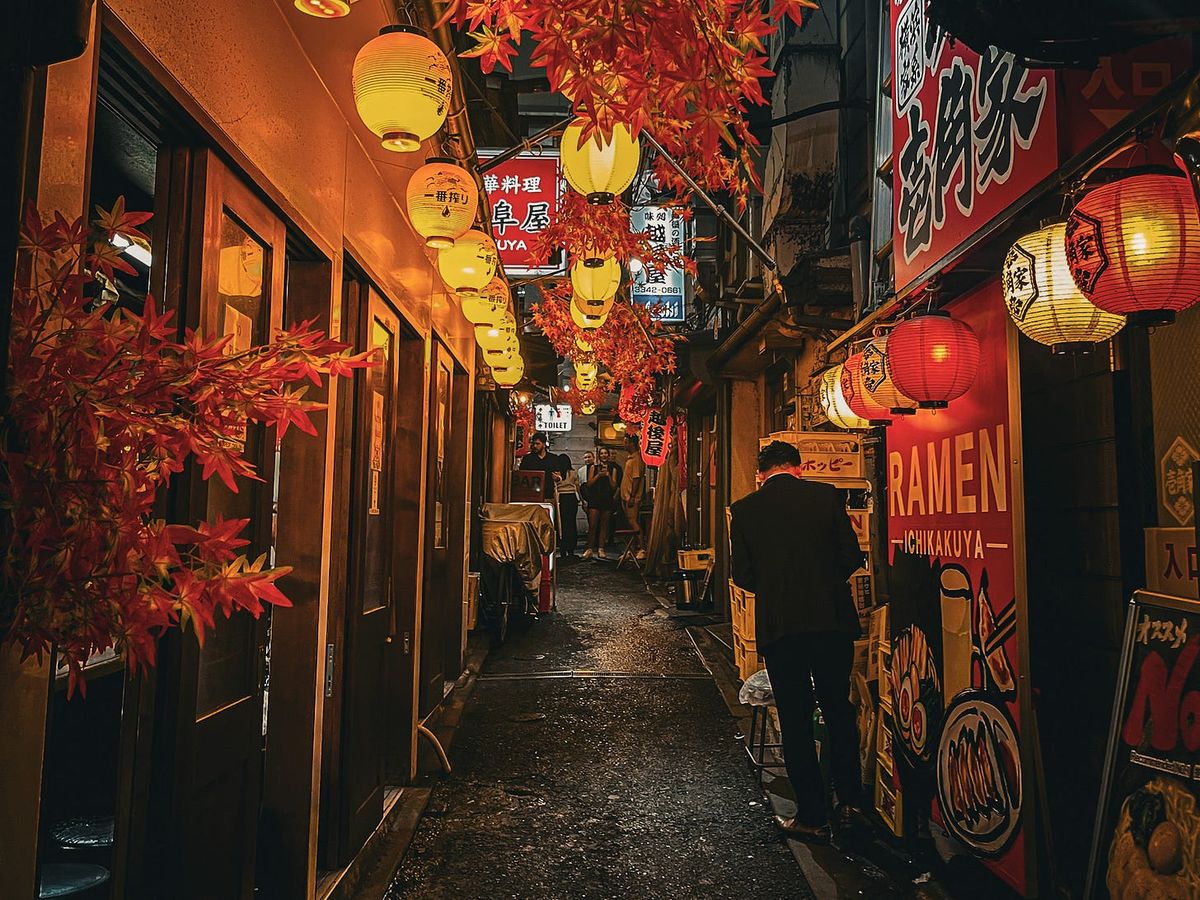
A Yokochō is traditionally a Japanese alleyway, however, over the years it has become the name given to the narrow lanes that are packed full of low cost bars and restaurants, hidden behind Tokyo’s busy main streets.
My personal favourite from our time in Tokyo Omoide-yokochō or ‘memory lane’ in Shinjuku.
Now, I have to admit that Omoide-yokochō is also more commonly (and less affectionately) known as Shonben-yokochō … drunkards alley, but don’t let this put you off visiting. Hidden away on the west side of Shinjuku station, Omoide-yokochō has housed dozens of tiny bars and Izakayas for the past 80-years.
If you’re looking for a fancy, Michelin star meal, then visiting a yokochō isn’t for you as these alleyways are more well-known for their affordable, laid-back and no-frills approach - the seating at the Yakitori bar that we visited for example was made from old beer crates and benches!
But whilst the furniture may be low frills, the food is fresh and seasonal.
And unlike western pubs & bars, izakayas serve smaller, tapas-style dishes that aren’t too filling or expensive. Meaning you can try a variety of dishes that won’t hurt your wallet or your stomach!
Visiting yokochō’s gave us an opportunity to try dishes like fried Oysters and Crab Cream Cakes that we hadn’t had before alongside ones that we knew we would love such as Chicken Skewers and Salmon Sashimi.
Thanks to their brightly coloured lanterns, cloth drapes and their compact nature, Tokyo’s yokochō’s have become some of the most iconic and heavily photographed nightscapes, yet most people tend to take their photographs and leave without saying kanpai!
But for a truly authentic, Japanese experience I fully recommend taking a seat, ordering a beer and a few dishes from whichever Izakaya takes your fancy.
You won’t regret it.
On the map
Interests