The premise of a 48-hour city guide is that you arrive on a Saturday evening, leave on a Tuesday morning, and try to make every minute count in between. Lisbon rewards this approach for the simple reason that it has an unusually low ratio of underwhelming experiences to time spent. Walk into almost any restaurant. Stop at almost any viewpoint. Find a square at random and order a coffee. The hit rate is, by city-break standards, remarkable.
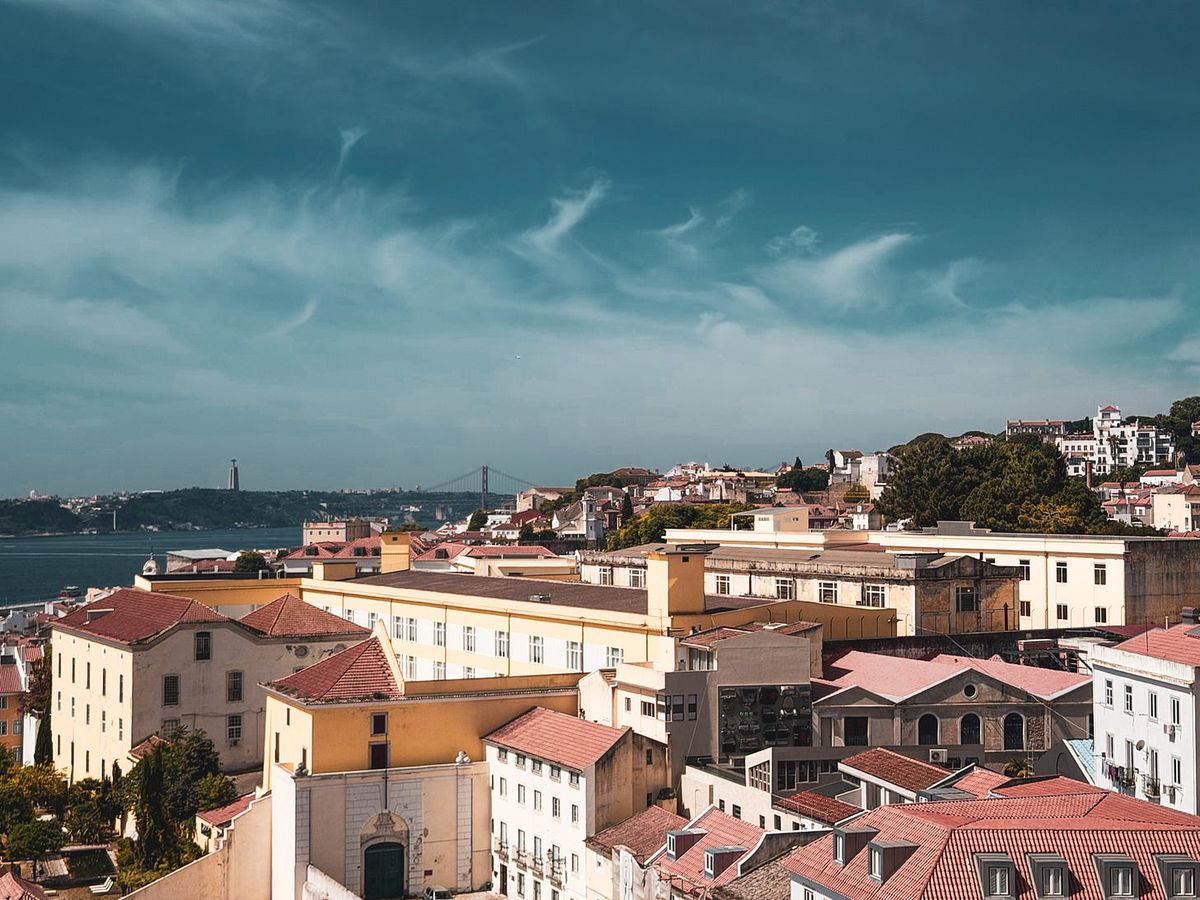
This is not a city that needs defending. It has been thoroughly discovered, comprehensively written about, and is no longer a secret of any kind. The relevant question is not whether Lisbon is worth visiting (it is) but whether the version of Lisbon that everyone breathlessly describes actually exists when you turn up. It does. The light is as good as advertised. The food is better. The hills are worse than you think (especially in Birkenstocks).
Two and a bit days is, perhaps surprisingly, enough to feel like you’ve taken Lisbon seriously, provided you’re willing to walk a lot and accept that you won’t get to everything.
Getting There
Direct flights from the UK to Lisbon Portela Airport run from most major UK airports, with journey times of around two and a half to three hours. We flew direct from Liverpool on a Saturday afternoon, which put us in central Lisbon in time for dinner. Tuesday morning return flights are similarly easy to find and worth the slightly earlier alarm if you want to maximise your time on the ground.
The airport sits inside the city, about seven kilometres from the centre. The sensible option is the metro: the red line runs directly from the airport terminal, and depending on where you’re staying, one quick change will get you to most central areas. We were heading to Santa Apolónia, which meant a red line ride, a change, and an onward train. The whole thing was easy, well signposted, and under a couple of euros. Cabs and ride-hailing apps (Bolt and Uber both operate here) are available but rarely worth the price difference.
Portugal is on the euro, which is presumably not a surprise. ATMs in the city centre offer reasonable rates; the airport machines do not.
Where to Stay
Lisbon’s centre fans out from the river in a way that makes neighbourhood choice matter more than it does in tighter cities like Sofia or Prague. Roughly: Baixa for tourist convenience, Chiado for atmosphere, Alfama for character, Príncipe Real for cool. None are bad. All are walkable from each other, with the caveat that “walkable” in Lisbon means a lot of unannounced inclines.
We stayed at The Editory Riverside Santa Apolónia, which we’d happily recommend. At around £90 a night it is not the cheapest option in the city, but the location is genuinely excellent: directly connected to Santa Apolónia station, which makes the metro and the regional trains both immediately accessible, and a short walk from Alfama. The hotel itself is grand in a non-pretentious way (think old-fashioned, classical, with art deco touches) and the river view from the room sealed it. For a base from which to ricochet around the city, it is hard to beat.
Day One: Arrival, Alfama and the Best Meal of the Trip
The Saturday evening arrival left just enough time to drop bags, get cleaned up, and walk into Alfama for dinner, which is exactly the kind of low-effort introduction Lisbon does very well. The neighbourhood is the oldest in the city, a tangle of narrow cobbled streets and small squares that rise up the hill below the castle. It is also, conveniently, where you will eat the best meal of the trip.
That meal, for us, was at Grelhador de Alfama, a tiny restaurant with a tiny grill room inside it that you can smell from the street before you’ve worked out which door you’re walking into. The menu is, sensibly, mostly grilled meats served with rice and salad. We ordered a selection, shared a carafe of the house red, and accepted very quickly that nothing we ate for the rest of the trip was going to top it.
Day Two: Pantheon, Oceanário, and a Castle
Sunday started with brunch at Breakfast Lovers Tram 28, which is exactly the kind of slightly chaotic, slightly oversubscribed brunch spot that Lisbon does in volume. Brunch is something of an institution here. Coffee is the second institution: small, strong, served fast, and roughly the strength of jet fuel. Combined, they make 10am on a Sunday in Lisbon a very productive hour.
The National Pantheon sits a few minutes’ walk from Santa Apolónia and is genuinely worth the entry fee, both for the building itself (a vast, light-filled Baroque dome) and for the rooftop view across the river and the rooftops of Alfama. Mornings are quieter; go early.
From there we headed across the city to the Oceanário, partly because Lisbon’s aquarium is consistently rated one of the best in the world, and partly because we specifically wanted to see the Forests Underwater exhibit, the Takashi Amano installation which closes on 30th June. It was worth the trip. Whether you go for the main aquarium or the exhibit, allow more time than you think you need.
A late lunch (read: a quick beer and a bacalhau snack at a cafe en route) bridged the gap to São Jorge Castle. The castle is high enough up to give you the obligatory panoramic view of central Lisbon, the river, and the bridge that everyone always mistakes for the Golden Gate. The ruins themselves are pleasant enough; the view is the reason to go.
Dinner that night was pizza at Pizzico, which sounds like an admission of defeat in a city famed for its own cuisine but is one of the better neighbourhood pizzerias we’ve eaten in for a while. Lisbon does this a lot: a strong international food scene running parallel to the traditional one, with neither feeling like the poor cousin.
Day Three: Sightseeing, Belém, and the Tower
Monday was the proper sightseeing day. We started at Lisbon Cathedral (the Sé), which is austere, atmospheric and quick to visit, then walked up to the Elevador de Santa Justa. The lift itself is currently closed, but you can walk up to the upper viewing platform from the back, which gives you essentially the same view across central Lisbon without queuing for the privilege.
A loop through the shopping streets around Chiado led to the Carmo Convent, the ruined Gothic church whose roofless nave is one of the most striking sights in central Lisbon, and on to Livraria Bertrand: officially the oldest operating bookshop in the world, with the certification on the wall to prove it. The interior is small, the history is real, and it’s worth ten minutes even if you don’t buy anything.
Lunch was at Time Out Market, which is everything a curated food hall ought to be. Loud, busy, expensive by Lisbon standards but cheap by London ones, and a sensible way to sample five Portuguese kitchens in one sitting without committing to a long lunch.
The afternoon was Belém. The sensible way to get there from central Lisbon is the tram or train; we grabbed a pair of electric scooters, which made for a faster (and considerably more entertaining) ride along the riverfront. Belém Tower itself is essentially a single, beautifully preserved sixteenth-century fortified tower sitting in the river, and it photographs better than it visits, but it’s worth seeing in person all the same.
Back to the hotel for a freshen-up, a final dinner, and an early night ahead of the Tuesday flight.
Food and Drink: A Brief Confession
In the interest of honesty: we did not eat a single pastel de nata until we got to the airport on Tuesday morning. We also failed to eat a bifana, which we are still annoyed about. These are not the achievements of serious food travellers. In our defence, almost every other meal in Lisbon was good enough that we rarely felt the gap.
The headline observations: coffee is excellent and aggressively caffeinated. Brunch is the default Sunday activity and you should lean into it. Wine is cheap, plentiful and worth ordering by the carafe rather than the glass. The food scene in Lisbon, traditional and international, is genuinely strong across price points. The four places we’ve mentioned, we would recommend to anyone (Grelhador de Alfama, Breakfast Lovers Tram 28, Pizzico, Time Out Market) cover the full range, and the breadth alone is a useful indicator of how broad the offering is.
Getting Around
The metro is clean, cheap and easy to navigate, but Lisbon’s terrain means you’ll walk more than you intend to. Wear sensible shoes; most of the interesting bits are uphill from wherever you’re standing. Electric scooters (Bolt, Lime) are everywhere and a fast way to cover the riverside stretches, particularly to Belém. Trams run on the famous routes; we didn’t ride the 28 this trip, but the network functions as transport rather than purely as a photo opportunity.
The Honest Summary
Lisbon is one of those rare cities where the hype is essentially accurate. It is genuinely beautiful, the food is consistently good, the neighbourhoods all have their own character, and even in a packed 48 hours you can see enough to feel like you’ve taken the place seriously. The trade-off, of course, is that it has been discovered: prices are closer to other western European capitals than to the bargain you’d find in somewhere like Sofia, and the central neighbourhoods are busy in a way that bears the unmistakable fingerprints of mass tourism.
Two things we’d do differently next time. First, more natas. Second, leave a day for Sintra, which we deliberately skipped in the interests of seeing Lisbon properly but which is by all accounts one of the great day trips in Europe. Both go on the list for the return visit, which feels less like a hypothetical and more like a near-certainty.