The premise of a 48-hour city guide is that you arrive with a plan and leave with opinions. Sofia rewards this approach unusually well, partly because the city has not yet been comprehensively discovered by the kind of tourists who ruin cities, and partly because almost everything good about it (the food, the architecture, the coffee, the parks) is either free or priced as though someone forgot to update it since 2009.
This is not a complaint.
Two days is, in fact, enough to feel like you understand Sofia. Three days would be better. But two will do, if you don’t waste them.
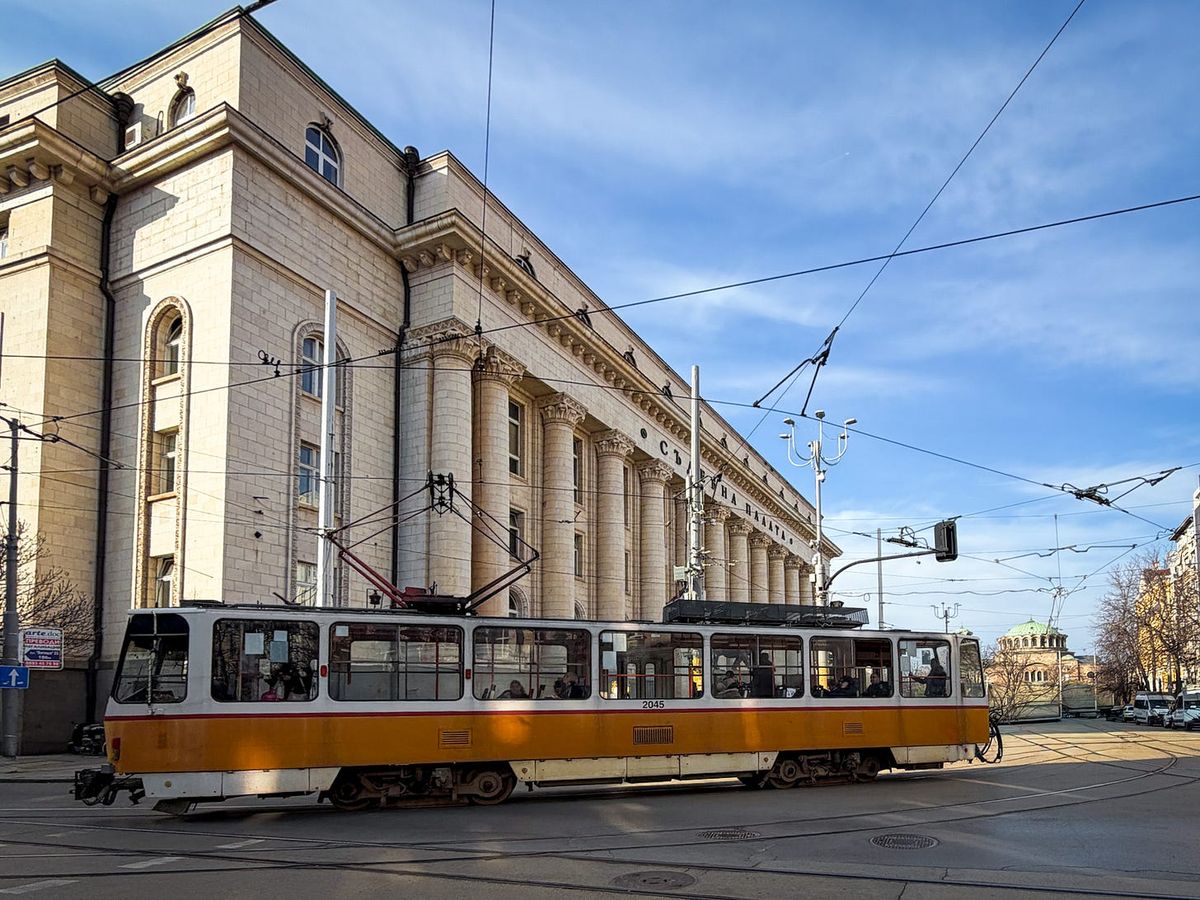
One thing worth addressing before you arrive, because it will otherwise catch you off guard: Sofia does not look like what you’re probably imagining. If your mental image is Soviet concrete (grey blocks, brutalist municipal buildings, the aesthetic of a city that spent forty years being actively discouraged from beauty) then the centre will surprise you. There is Soviet architecture here, and it’s worth seeing on its own terms. But the dominant character of the city centre is central European: wide Viennese-style boulevards, ornate nineteenth-century civic buildings, and a distinct Venetian influence visible in the arched colonnades, terracotta rooflines and decorative facades that line the streets around the city’s main squares. Sofia was extensively rebuilt in the late 1800s under the influence of Austro-Hungarian architects brought in after independence from Ottoman rule, and that legacy gives the centre a grandeur that most visitors simply don’t expect. It’s one of the city’s best-kept secrets, which is saying something for a city that is essentially one large best-kept secret!
Getting There
Direct flights from the UK to Sofia Airport run from several UK airports including Manchester, Liverpool, Luton and Stansted, with journey times in the region of three hours. The airport sits about ten kilometres east of the city centre. The sensible option (cheap, fast, and entirely free of taxi negotiation stress) is the metro. Line 1 connects the airport directly to the city centre in around half an hour, for under a euro. Bear this in mind when the man with the Mercedes outside arrivals quotes you forty!
And whilst we’re on the topic of currency, Sofia operates on the euro (Bulgaria joined the eurozone on 1st January 2026), which makes life considerably simpler for visitors from western Europe. Cash is still useful for smaller local places; get some at an ATM in the city rather than the exchange desks or machines immediately outside baggage claim for the best rate though.
Where to Stay
The city centre is walkable and well-connected by metro and tram, so the main thing to avoid is the outskirts. For location, anywhere around the Serdika or NDK metro areas puts you within reach of the main sights without requiring any effort. Budget hotels here are genuinely budget (you can stay well for thirty to forty euros a night) and the mid-range options are excellent value by any western European standard.
One option worth flagging is Kitchen59, a hotel on the outskirts of the centre that comes in at around fifty euros a night and punches well above that price point. It makes a comfortable and well-priced base for a few nights, and is a useful early indicator of what Sofia does consistently well: decent quality at prices that feel almost implausibly reasonable by western European standards!
Day One: Get Your Bearings, Then Get Lost
The best single thing you can do on your first morning in Sofia is take the free walking tour available. I do not say this lightly. I have taken many free walking tours in European cities and most of them are two hours of pointing at buildings while being softly guilted towards a tip. Sofia's is different. The guides are genuinely excellent, and the route covers the full sweep of the city's layered history — Thracian, Roman, Ottoman, Soviet and modern day architecture all coexist here in a way that is architecturally baffling and historically fascinating. The tour here also happens to be so good that locals actively recommend it to visitors, which in my experience is about the highest endorsement a tourist activity can receive.
The tour takes you past Alexander Nevsky Cathedral (which is either more or less impressive than you’re expecting, depending on what you’ve read), the ancient Serdica ruins visible through a glass floor at the Serdika metro station, the Rotunda of St George (a fourth-century Roman church that somehow still exists, in a courtyard between a hotel and a government building), and enough Soviet-era architecture to fuel several separate conversations about history and aesthetics. It’s worth pausing on that last point: Bulgaria only emerged from communist rule in 1990. Thirty-five years ago. The country is younger as a democracy than many of the people walking its streets (including me), and that recent history is visible everywhere: in the architecture, in the pace of change, in the slight sense that Sofia is still working out exactly what it wants to be. That’s not a criticism. It’s part of what makes it interesting.
Afternoons are for wandering. The Vitosha Boulevard pedestrian street handles the shopping. The area around the National Palace of Culture (NDK) opens up into wide tree-lined boulevards that have the slightly formal, unhurried quality of a central European city, which architecturally is largely what Sofia is. Let the Venetian-inflected facades and the colonnaded civic buildings do their work. This is not the grey concrete city of popular imagination, and the walk will keep reminding you of that.
South Park: For the Runners (and Everyone Else)
If you run, South Park is not optional. I covered almost 40 kilometres there across multiple visits and never once found myself repeating a route or running out of paths to explore. The park is large, green, well-maintained, and almost entirely free of the pebbled tourist zones that make city running elsewhere such a negotiation. Early mornings are particularly good: locals walking dogs, a few serious cyclists, the kind of uncrowded urban nature that you don’t expect to find in a capital city.
If you don’t run, South Park is still worth an afternoon. Bring coffee. Find a bench. Watch Sofia go about its actual daily business, which turns out to be considerably more interesting than most cities’ tourist highlights.
Food and Drink: You Will Not Have a Bad Meal
I should be careful here because I realise this sounds like an exaggeration. It is not. In two days of eating in Sofia, across a range of restaurants and price points, I did not encounter a single disappointing meal. Bulgarian cuisine gets very little attention outside its borders, which is an oversight. It is meat-forward, herb-heavy, generously portioned, and priced in a way that makes you briefly reconsider every restaurant meal you’ve paid for in the UK.
Under the Linden Trees is the place for traditional Bulgarian cooking done properly: tarator (cold cucumber and yoghurt soup), kavarma (slow-cooked meat in a clay pot), banitsa (cheese-filled filo pastry), all in a setting that manages warmth without sliding into tourist-trap cosiness. Book ahead if you can; it fills up.
Coffee culture is strong. Local wine is cheap and frequently very good (particularly the reds). Beer is heavily German influenced, cold and wheaty and served in large measures at prices that require no further comment.
Getting Around
Sofia has a clean, cheap and easy-to-navigate public transport network covering metro, trams and buses. A single ticket costs under a euro. Day passes are available and make obvious sense if you’re covering ground. The metro is modern and well-signposted in both Cyrillic and Latin script, and the trams cover areas the metro doesn’t reach.
Ride-hailing apps (Yellow and TaxiMe) operate in Sofia and are significantly cheaper than their western European equivalents. But between walking distance and public transport, you may find you barely need them.
The Honest Summary
Sofia is the kind of city that doesn’t market itself particularly well, which is both its problem and, for the moment, its advantage. It is genuinely underrated. The food is excellent, the history is dense and interesting, the parks are good, the transport works, and the whole thing costs a fraction of what you’d spend in Prague, Lisbon or any of the other mid-European capitals that have long since been discovered and priced accordingly. There’s also something quietly compelling about visiting a country that is only 35 years into democracy. Sofia doesn’t have the polished, packaged quality of cities that have been tourist destinations for generations. It feels like a place in motion, and that energy, once you tune into it, is genuinely infectious.
It is also, I’d suggest, best experienced without too rigid a plan. The free walking tour will orientate you. South Park will sort out your mornings. The restaurants will handle everything else. The rest (the Soviet murals you stumble on, the orthodox churches hidden between apartment blocks, the particular quality of a Bulgarian afternoon in a tree-lined square) you find by accident, which is how the best parts of any city are always found.